
5 Reasons We Keep Coming Back to Galápagos
I’ve been going to Galápagos for years, and there’s still a moment on almost every trip when I find myself staring out into the blue thinking:
What the hell is going to show up next?
You might be at Darwin waiting for the hammerheads you came halfway around the world to see. You know they’re there. You’ve seen them before.
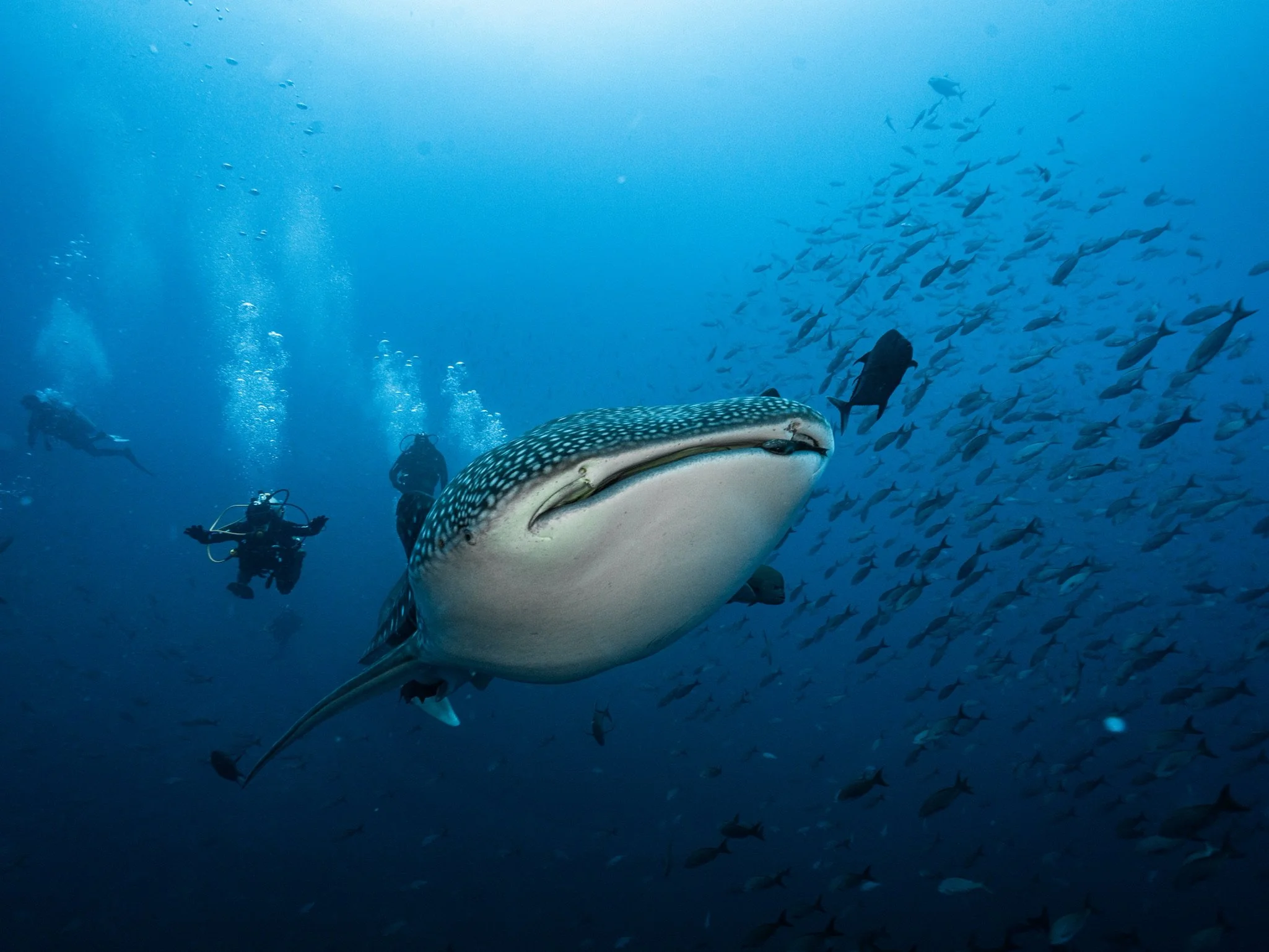
And then something completely different comes out of the blue.
Maybe it’s a huge tiger shark.
Maybe it’s a yellowfin tuna flying past.
Maybe dolphins show up.
Maybe it’s orcas.
That’s Galápagos.
I’ve photographed it, led expeditions there and gone back enough times that I know what we’re supposed to see at different sites.
But I’ve never felt like I knew what we were actually going to get.
That’s what keeps pulling me back.
1. You Never Know What’s Going to Come Out of the Blue
This is probably the number-one thing about diving Galápagos that I have a hard time explaining to somebody who hasn’t experienced it.
You go there knowing what you’re looking for.
At Darwin and Wolf, you want the schooling hammerheads. Depending on the season, you’re thinking about whale sharks. You’re expecting Galápagos sharks, eagle rays, turtles and all the other animals these islands are known for.
But those are only the animals you expect.
It’s everything else that makes Galápagos so addictive.
I’ve been on trips where yellowfin tuna suddenly come ripping through. You can get a massive tiger shark appearing out of nowhere. Dolphins come through a dive. And killer whales occur in Galápagos waters too.
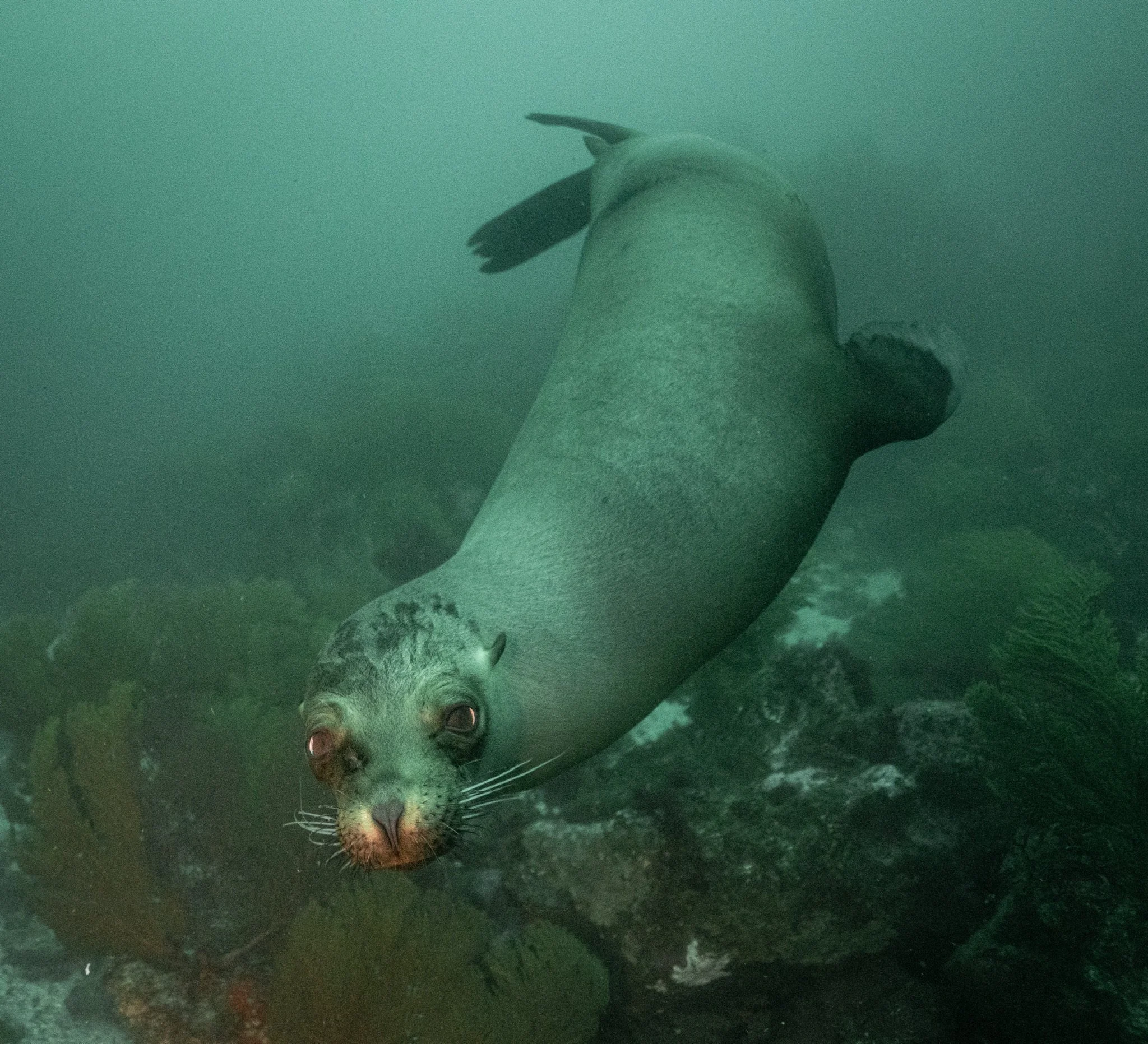
That’s the part you can’t schedule.
You can plan the right season. You can go to the right island. You can put yourself in the right place.
But you can’t order the encounter.
And there’s a reason Galápagos feels this way.
Major ocean currents converge around this relatively small group of islands. Cool, nutrient-rich water arrives from the south, warmer water from the north, and the deep Cromwell Current comes in from the west. That combination supports this extraordinary mixture of animals and ecosystems.
So when I’m sitting at Darwin looking out into open water, I never stop looking into the blue.
I’ve been there before.
I know what’s probably coming.
But Galápagos has taught me never to assume that’s all I’m going to see.
2. It Feels Like Four Dive Trips Around the World Packed Into One
This might be the thing I love most about Galápagos.
If you wanted to travel around the world to find the diversity you can encounter on a single Galápagos liveaboard, I honestly think you’d need three or four completely different trips.
Because what other itinerary gives you this combination?
You’re at Darwin and Wolf with schooling hammerheads, whale sharks, Galápagos sharks and huge pelagics.
Then you’re diving with mantas and rays.
You head west and suddenly you’re looking for mola mola.
There are penguins swimming past you.
Marine iguanas are feeding underwater.
Sea lions are everywhere.
There are tropical species, cold-water species, massive pelagics and strange endemic animals that exist nowhere else.
Nearly 20% of Galápagos marine life is endemic, and its position at the meeting point of warm and cold ocean currents allows animals associated with dramatically different environments to coexist around the same archipelago.
That’s insane when you actually think about it.
And you feel those changes as you travel.
Darwin and Wolf don’t feel like western Isabela.
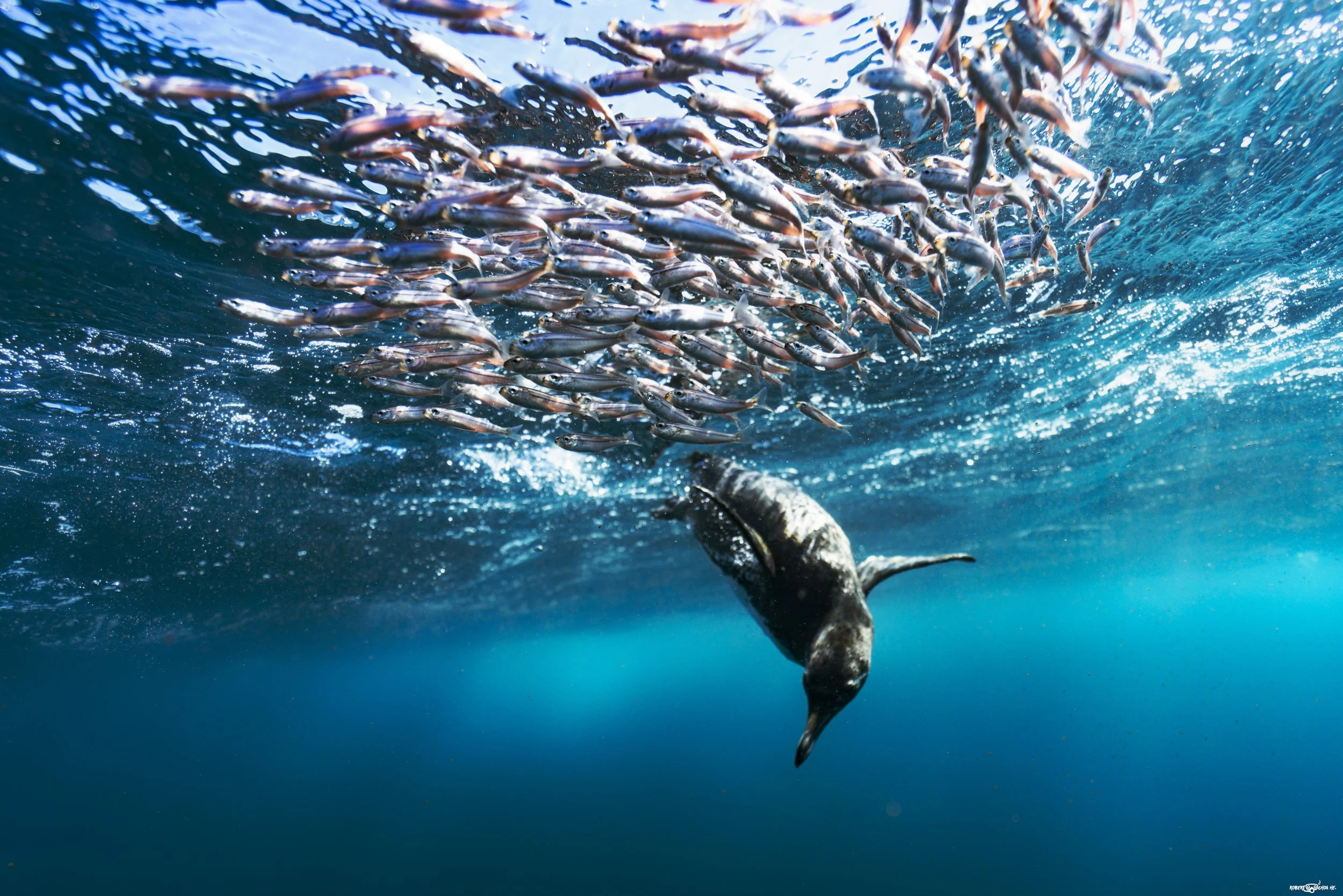
Western Isabela doesn’t feel like Fernandina.
Fernandina doesn’t feel like the central islands.
At Punta Vicente Roca, on the northwestern side of Isabela, you’re looking for a completely different set of encounters than you were looking for a couple of days earlier at Darwin.
Then you get to Fernandina and you’re jumping in to photograph penguins and marine iguanas.
You’re still on the same expedition.
That’s what blows my mind about Galápagos.
Every couple of days it feels like somebody changed the destination without changing the boat.
3. The Conditions Aren’t Something to Fear — They’re Part of Why Everything Is There
I hear this all the time when people talk to me about diving Galápagos.
“Aren’t the currents crazy?”
Or:
“Isn’t the water freezing?”
And I think Galápagos sometimes gets made to sound much more intimidating than it needs to be.
Yes, there can be current.
Of course there can.
But those currents are one of the reasons we’re there.
They’re moving nutrients through the ecosystem. They’re part of what creates the productivity that attracts all that marine life.
And we’re not spending the entire trip fighting against them.
You learn to dive with the conditions. Sometimes you’re protected by the structure of the site. Sometimes you’re moving with the water. Sometimes you find your position and watch the show.
The current isn’t some inconvenience standing between you and Galápagos.
The current is part of Galápagos.
The same thing goes for temperature.
Personally, I dive almost the entire trip in a 1.5 mm open-cell wetsuit.
When we get to western Isabela and Fernandina, that’s when I change.
I’ll put on my 5 mm and a hood.
And there’s a very good reason for that.
The subsurface Cromwell Current comes from the west and is forced upward when it hits the Galápagos platform. That cold, nutrient-rich upwelling makes the waters around Fernandina and western Isabela some of the richest in the entire archipelago. It’s also part of why this area supports animals like Galápagos penguins and flightless cormorants.
So yes.
The water gets colder.
But we’re going there because the water gets colder.
That’s where we’re looking for penguins.
That’s where we’re looking for mola mola.
That’s where we’re diving with marine iguanas.
I don’t look at that temperature change as something I have to tolerate.
I look at it as the moment when Galápagos changes again.
4. The Boat Becomes Part of the Expedition
This is something I think gets overlooked when people talk about Galápagos.
Everybody talks about Darwin.
Wolf.
Hammerheads.
Whale sharks.
But some of my favorite memories happen between the dives.
You’re out there on a liveaboard, far away from everything, with the same group of people for a week.
And something happens.
You start as a group of divers.
Then you start becoming a crew.
You eat together. You dive together. You tell stories. Somebody tells you about Raja Ampat. Somebody else tells you about Socorro. Someone has been somewhere you’ve always wanted to go.
You learn where people are from and why they dive.
After a great dive, everybody comes back onto the boat talking at once because everyone saw the same encounter from a completely different angle.
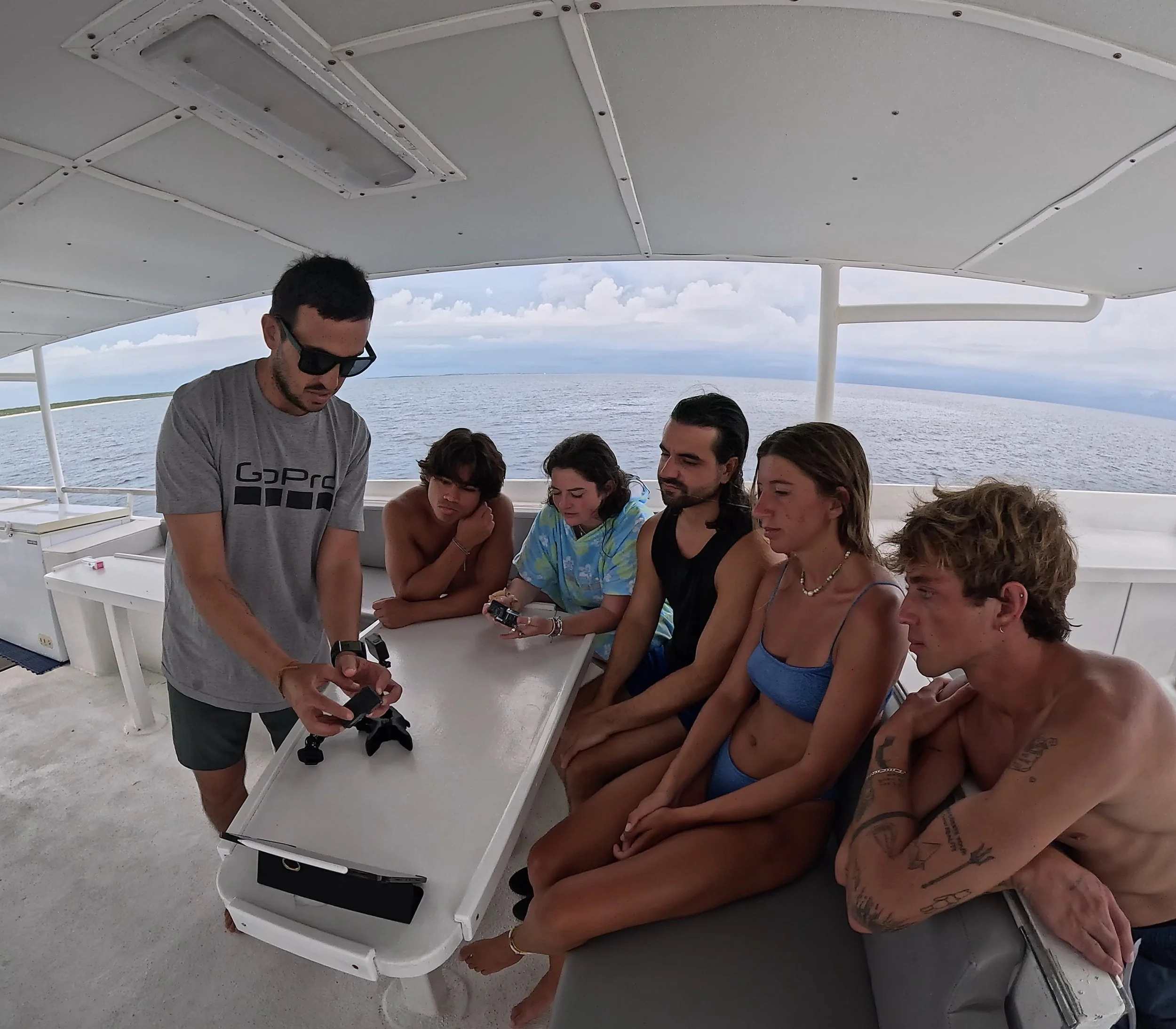
Then the cameras come out.
We’re looking through clips.
We’re editing.
We’re arguing about who actually got the shot.
Someone missed the whale shark because they were looking in completely the wrong direction and they’re never going to hear the end of it.
That’s a big part of the experience for me.
There’s enough time to actually connect.
There’s time to work on your footage.
There’s time to learn from the other people onboard.
There’s time to sit outside and talk about where everyone has been and where everyone wants to go next.
And because you’re moving through these remote islands together, it doesn’t really feel like a normal dive vacation.
It feels like an expedition.
You wake up somewhere new.
You dive.
You eat.
You shoot.
You edit.
You tell stories.
You go to sleep.
And the boat keeps moving.
Then you wake up and do it all again somewhere completely different.
By the end of the week, the people have become as much a part of the story as the animals.
5. It’s One of My Favorite Places in the World to Tell Stories With a Camera
And ultimately, this is probably why I personally keep going back.
Galápagos gives you everything you need to tell a story.
Not just beautiful underwater footage.
A story.
You’ve got the obvious stuff.
Hundreds of hammerheads disappearing into blue water.
A whale shark that makes a diver look tiny.
Marine iguanas crawling across volcanic rock and then dropping into the ocean to feed.
Penguins.
Sea lions.
Mola mola.
But then there’s everything surrounding it.
The islands themselves feel ancient.
Black volcanic rock.
The giant tortoises.
The birds.
The landscape.
The boat sitting alone in the middle of nowhere.
The zodiac rides.
Getting ready before a dive.
The anticipation when you know you’re about to jump into Darwin.
And then there are the people.
That’s what I’ve learned from years of shooting these trips.
If I only come home with beautiful footage of sharks, I’ve documented the wildlife.
But I haven’t necessarily told the story of the expedition.
The story is the person who has never seen a hammerhead before finally seeing hundreds of them.
It’s what happens five minutes before you jump in.
It’s everybody losing their minds when they climb back into the zodiac.
It’s reviewing the footage later that afternoon.
It’s the landscape that tells you where you are.
It’s the friendships that form while you’re out there.
And a liveaboard gives you something else that’s increasingly difficult to find:
time to focus.
You’re not checking in and out of hotels. You’re not driving back and forth to a dive shop every morning. You’re not constantly packing equipment.
You’re there.
You dive. You shoot. You come back. You look at what you captured. You talk about it. You edit. You think about what you missed.
Then tomorrow, you get another chance.
For someone who loves visual storytelling, that’s pretty hard to beat.
And That’s Why I Keep Going Back
I’ve been going to Galápagos for years.
I’ve photographed it.
I’ve led groups there.
I’ve seen the encounters everyone dreams about seeing, and I’ve had animals appear that nobody on the boat was expecting.
And somehow, I’ve never left thinking:
Okay. I’ve seen Galápagos.
It’s always the opposite.
There’s always one more animal.
One more island.
One more story.
One more moment when you’re staring into seemingly empty blue water and somebody starts banging on their tank.
You turn around.
And there it is.
Whatever it happens to be this time.
That’s Galápagos.
And in January, we’re going back.
I know where we’re going.
I know what we’re hoping to see.
I have absolutely no idea what Galápagos is actually going to give us.
And that’s exactly why I can’t wait to get back in the water.
