
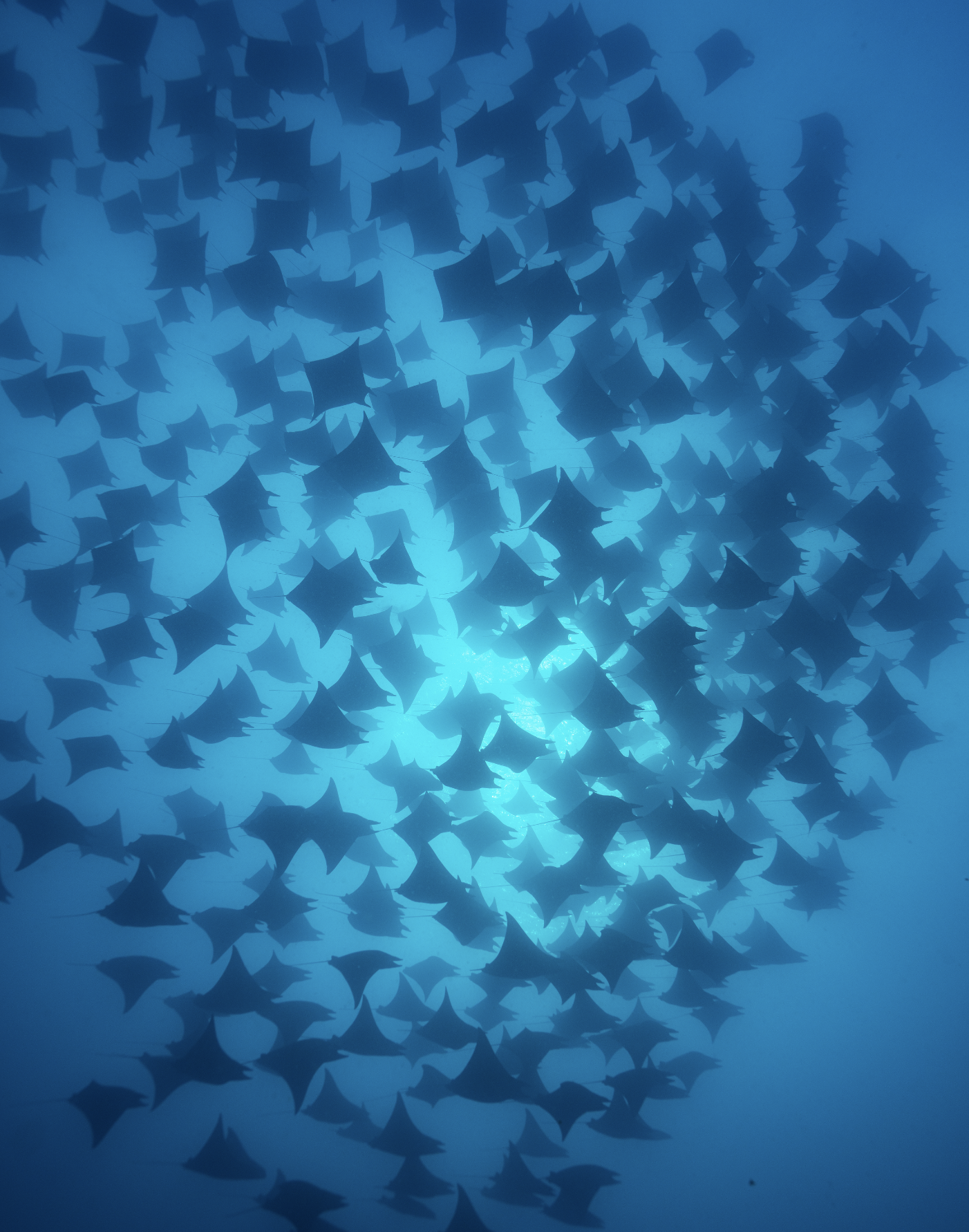
Aquatics International × GoPro Escapes · Ecuador
GALAPAGOS
Jan 19-27, 2027
8-Night / 9-Day — In The Crucible of Evolution: A Diver’s Dream
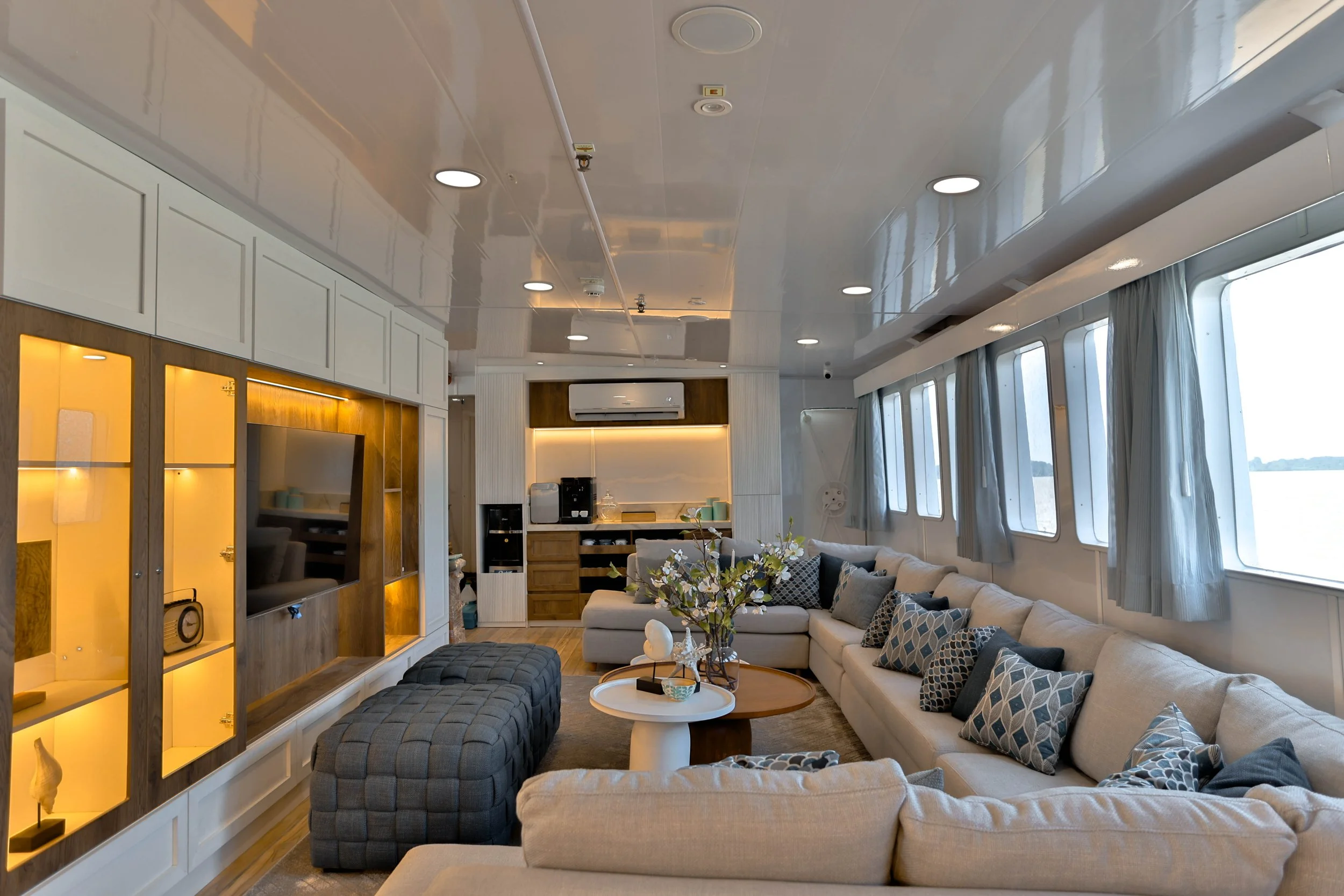
Seven nights aboard Galaxy Diver III running north to Wolf and Darwin, plus a night in Guayaquil and return flights to the islands included. Nitrox on every dive.
From
$7,000 USD
Vessel
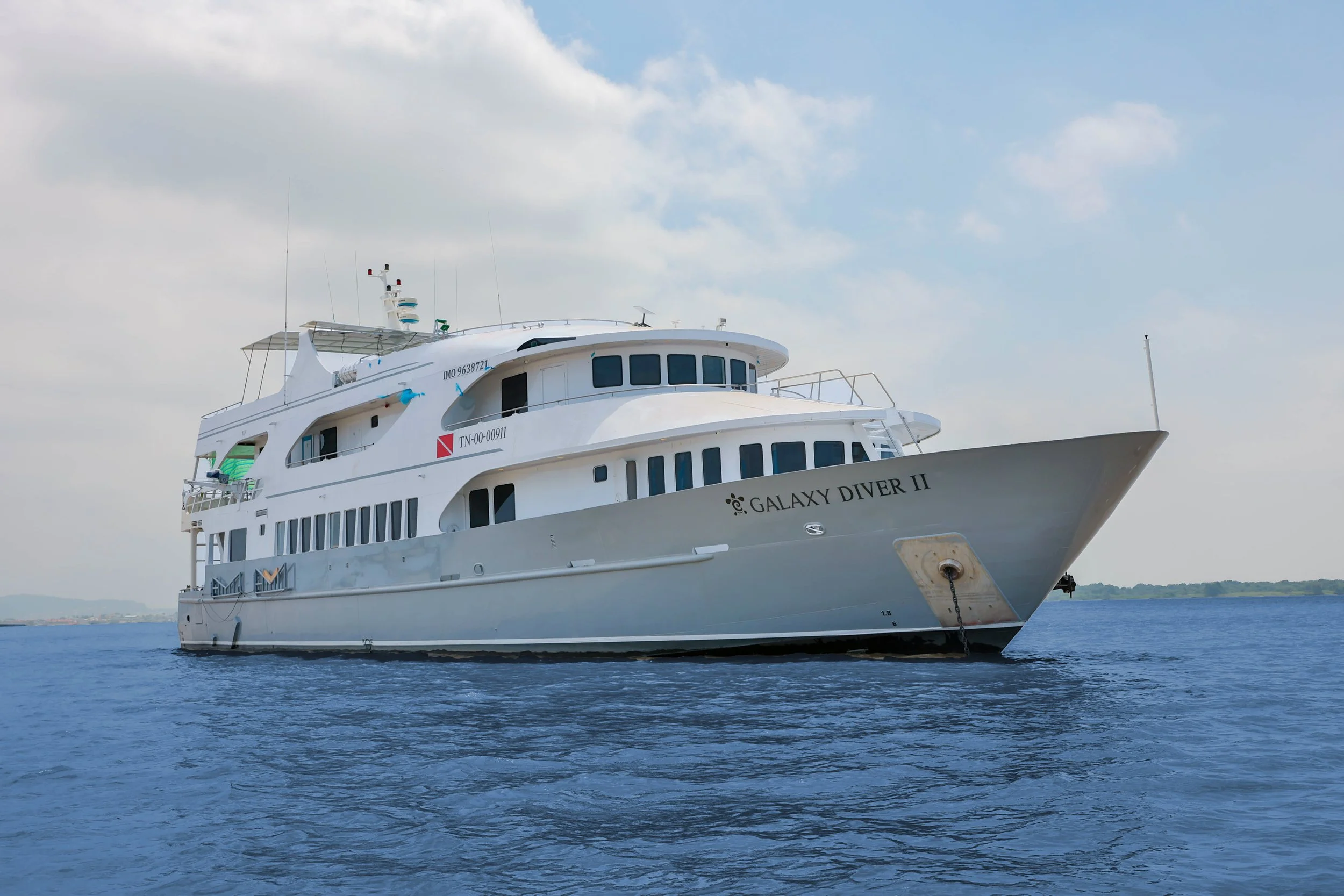
Galaxy Diver III
Level
Advanced Open Water Required
galapagos cabins
$500 deposit secures your spot
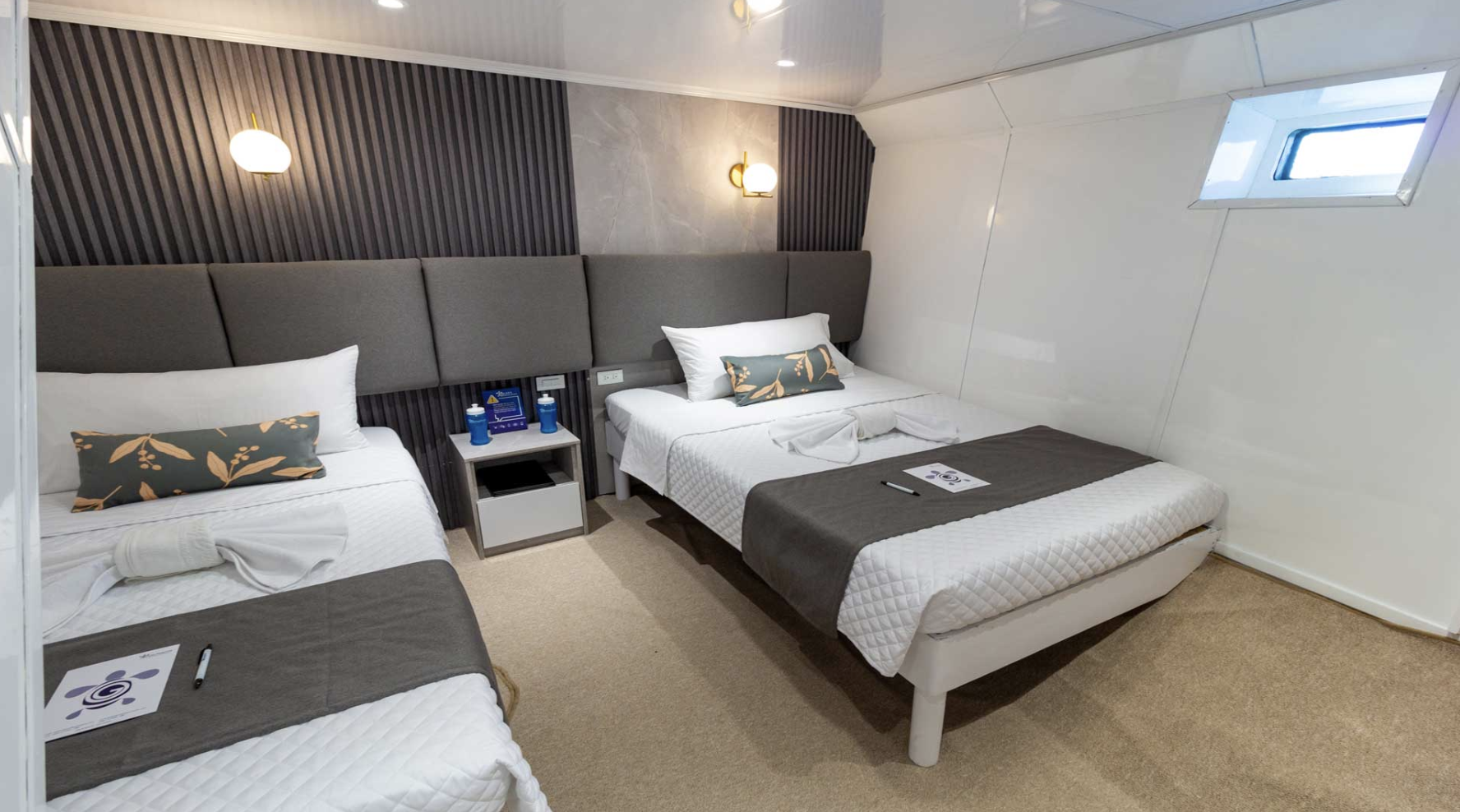
🛏️ Shared Cabin
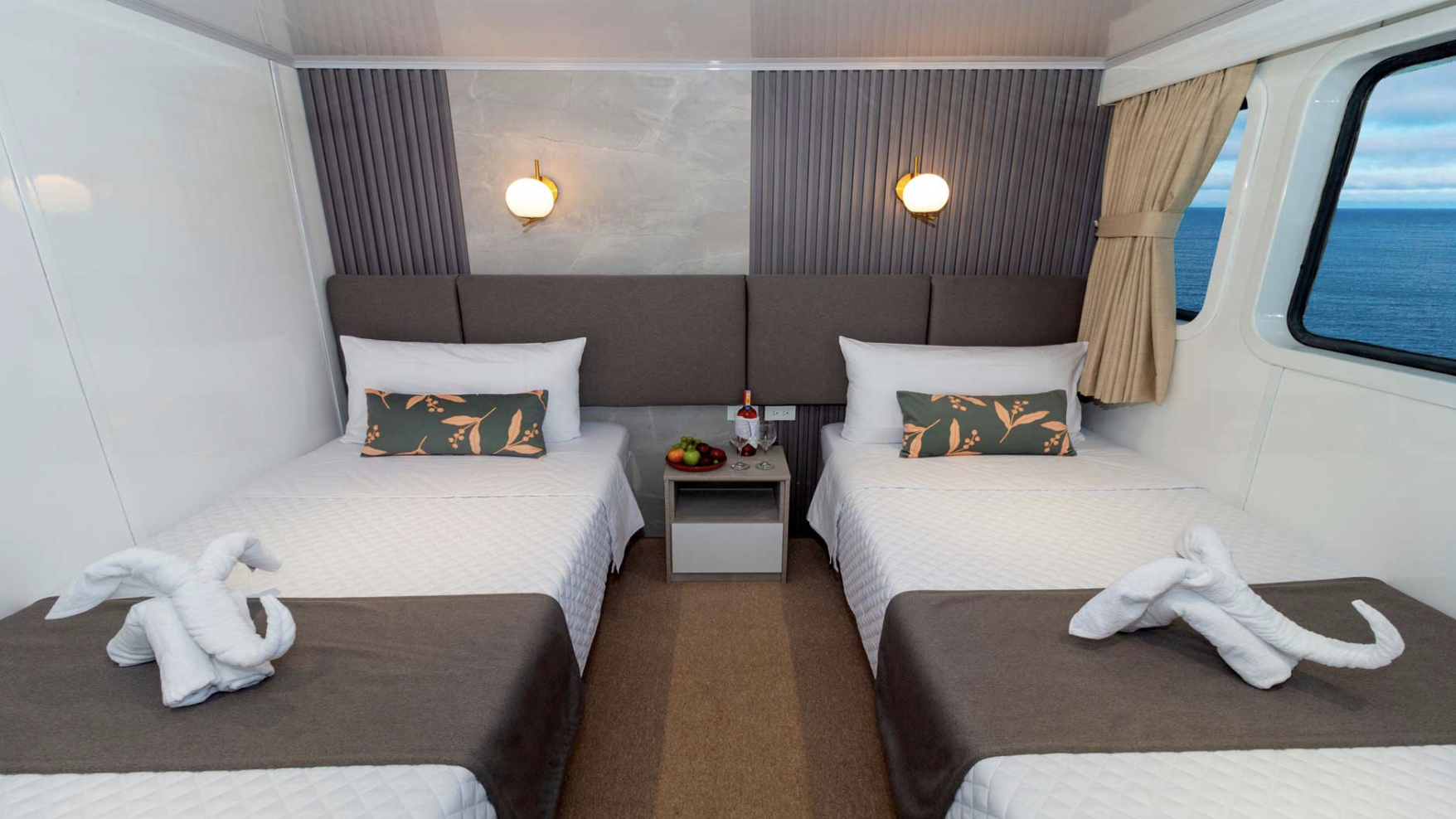
You are reserving ONE twin bed in a SHARED cabin with two full beds total. Your cabin mate will be another solo diver (same gender unless requested otherwise) OR your travel companion if you book together.
Room placement: If you'd like to be placed with someone making a separate booking, let us know after booking and we'll coordinate. If you're booking with travel companions on the same reservation, you'll automatically be placed in the same cabin together. Solo divers are matched with another solo guest.
A $500 non-refundable deposit is taken at time of booking to secure your spot.
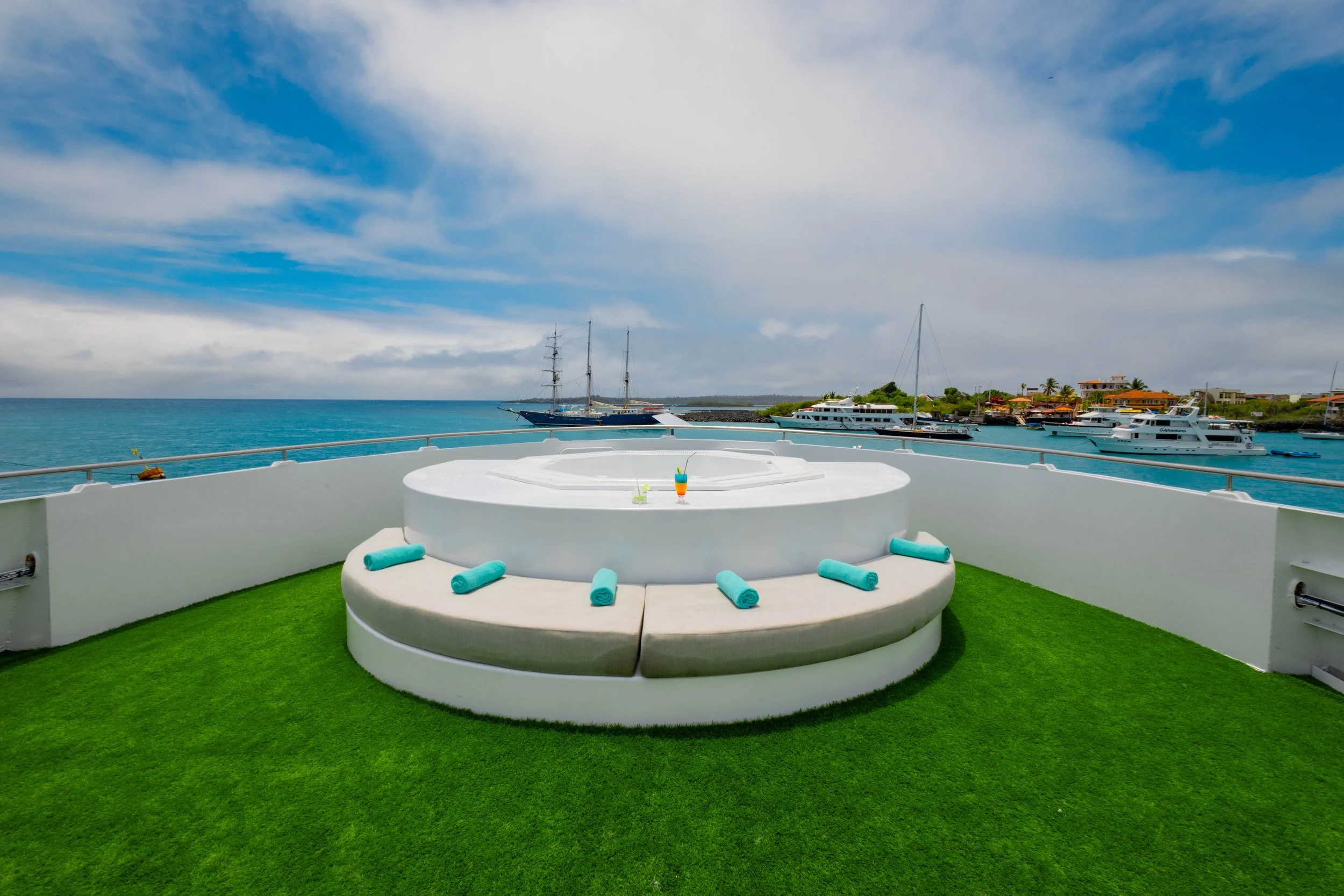
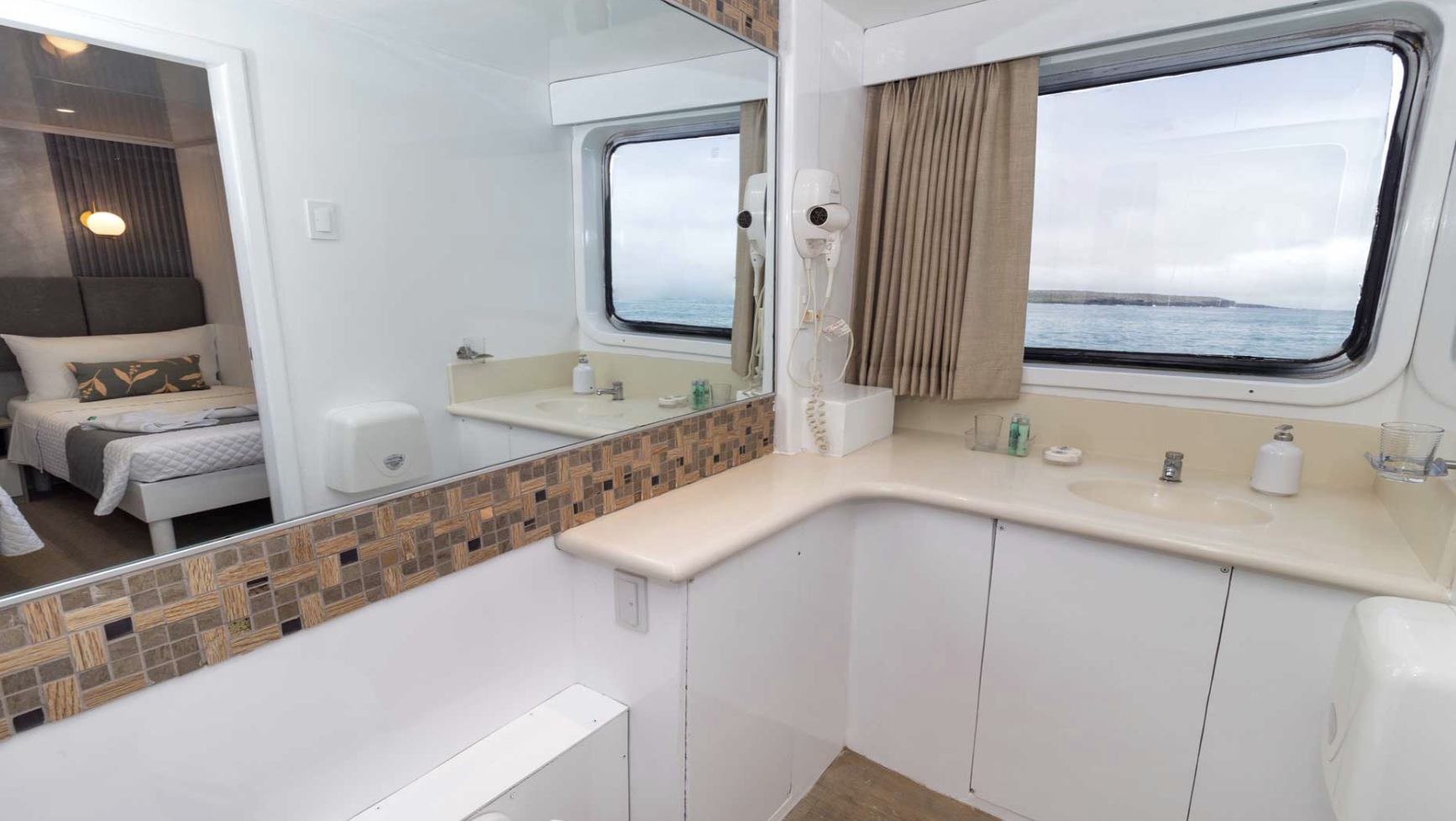
Amenities: En-suite bathroom · Air conditioning · Storage space · Ocean view
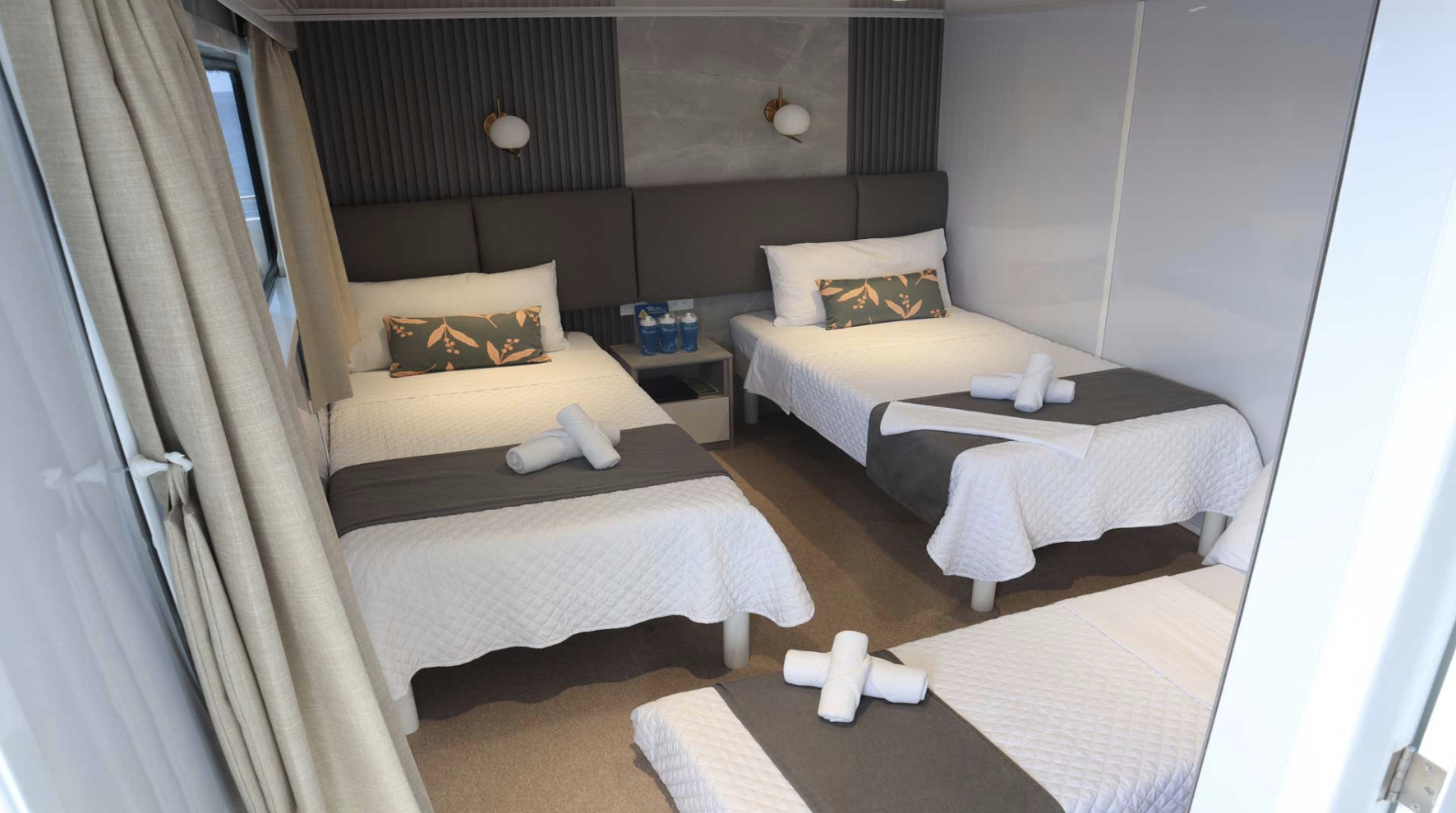
🛏️ Shared Cabin You are reserving
ONE twin bed in a SHARED cabin with three twin beds total. Your cabin mates will be others solo divers (same gender unless requested otherwise) OR your travel companions if you book together.
Room placement: If you'd like to be placed with someone making a separate booking, let us know after booking and we'll coordinate. If you're booking with travel companions on the same reservation, you'll automatically be placed in the same cabin together. Solo divers are matched with another solo guest.
A $500 non-refundable deposit is taken at time of booking to secure your spot.
Amenities: En-suite bathroom · Air conditioning · Storage space · Ocean view
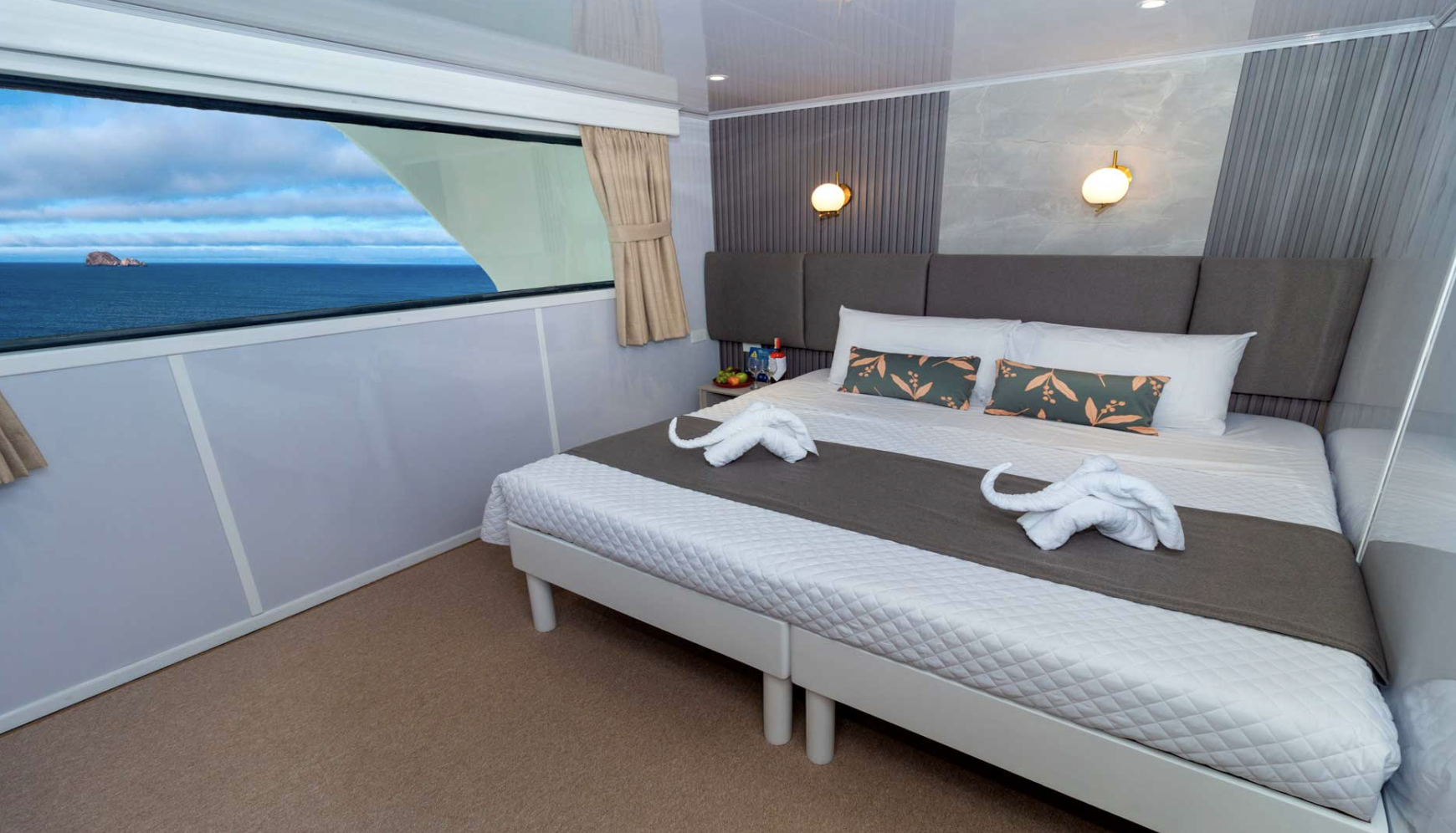
🛏️ Private Cabin · Solo Occupancy
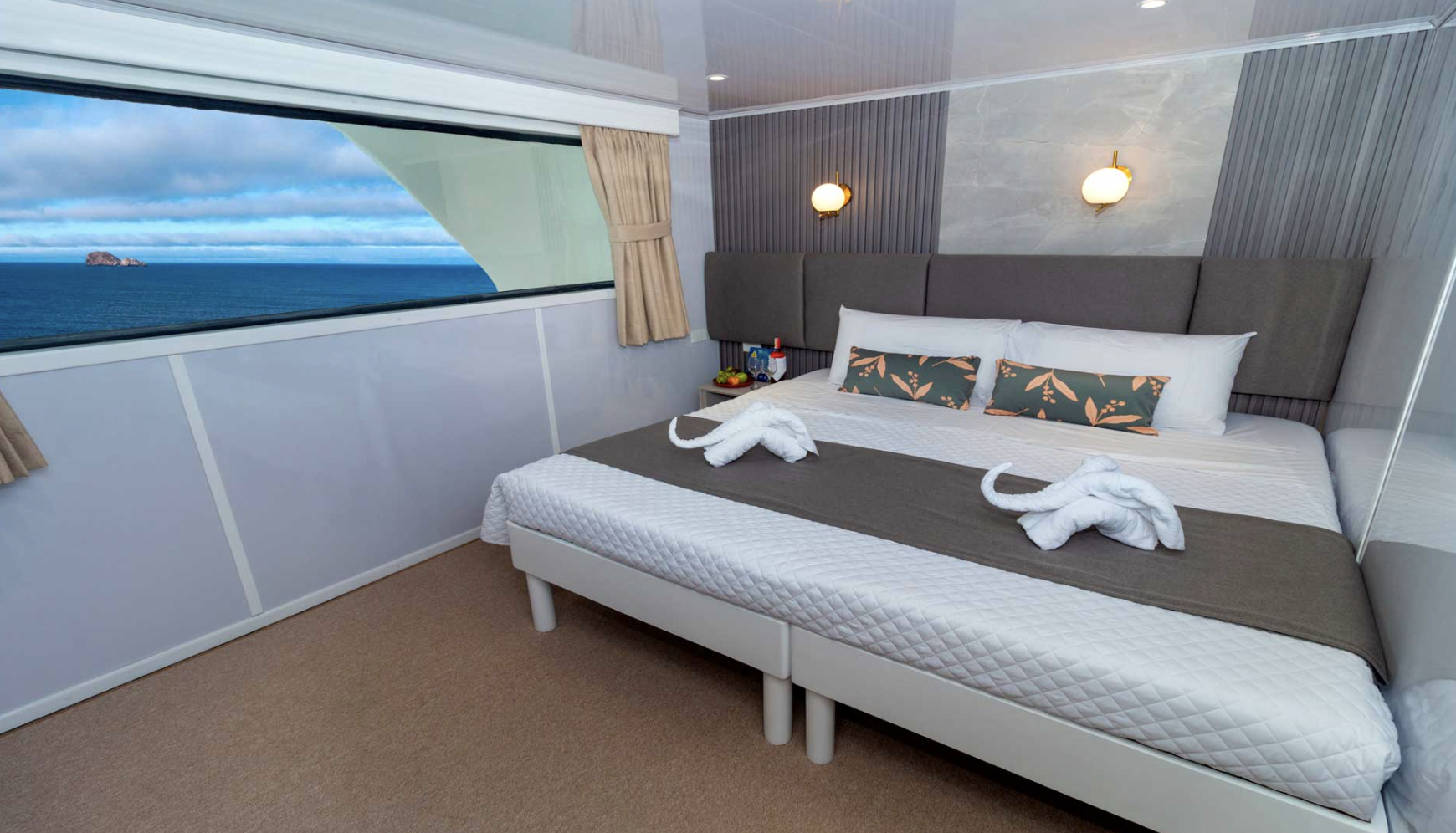
The entire cabin is yours, with 1 queen bed. Priced as the full cabin since no second diver is sharing. If you're booking with a travel companion who will share the queen bed, select: Private Cabin (2 divers, shared bed) instead for the per-diver rate.
A $500 non-refundable deposit is taken at time of booking to secure your spot.
Amenities: En-suite bathroom · Air conditioning · Storage space · Ocean view
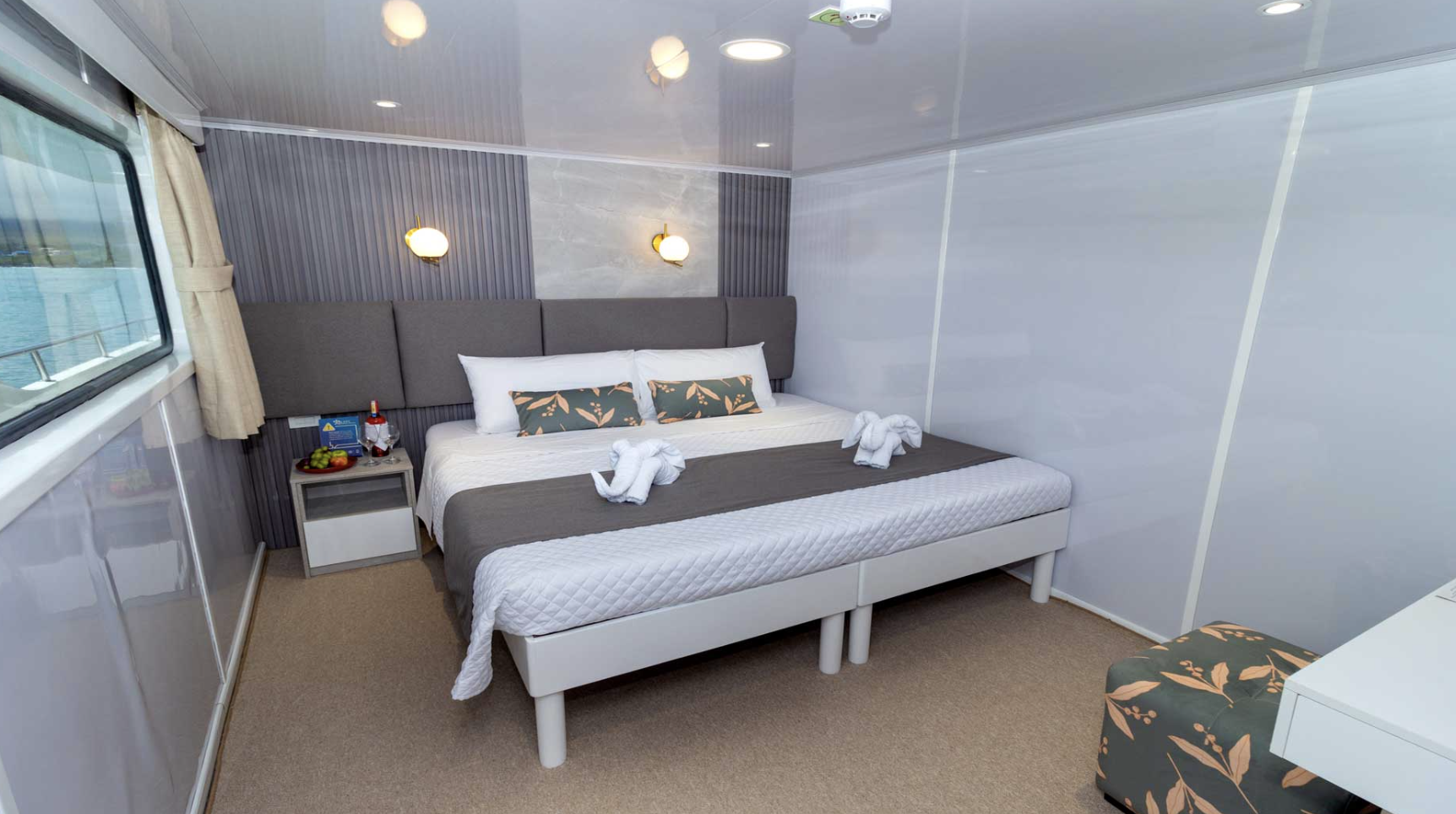
🛏️ Private Cabin · Friend/Couple Occupancy
The entire cabin is yours, with 1 queen bed shared between 2 divers.
Both divers must be on the same reservation. If you're booking solo and want the private cabin to yourself, select Private Cabin (Solo) instead.
A $1,000 non-refundable deposit ($500 per person) is taken at time of booking to secure your spot.
Amenities: En-suite bathroom · Air conditioning · Storage space · Ocean view
Included
Roundtrip flight Guayaquil to Baltra (GPS) (average RT price is $375)
1 night stay in Guayaquil (average hotel night is $120)
GoPro PADI® Distinctive Specialty Certification ($100 value)
GoPro QUIK Editing PADI® Distinctive Specialty Certification ($100 Value)
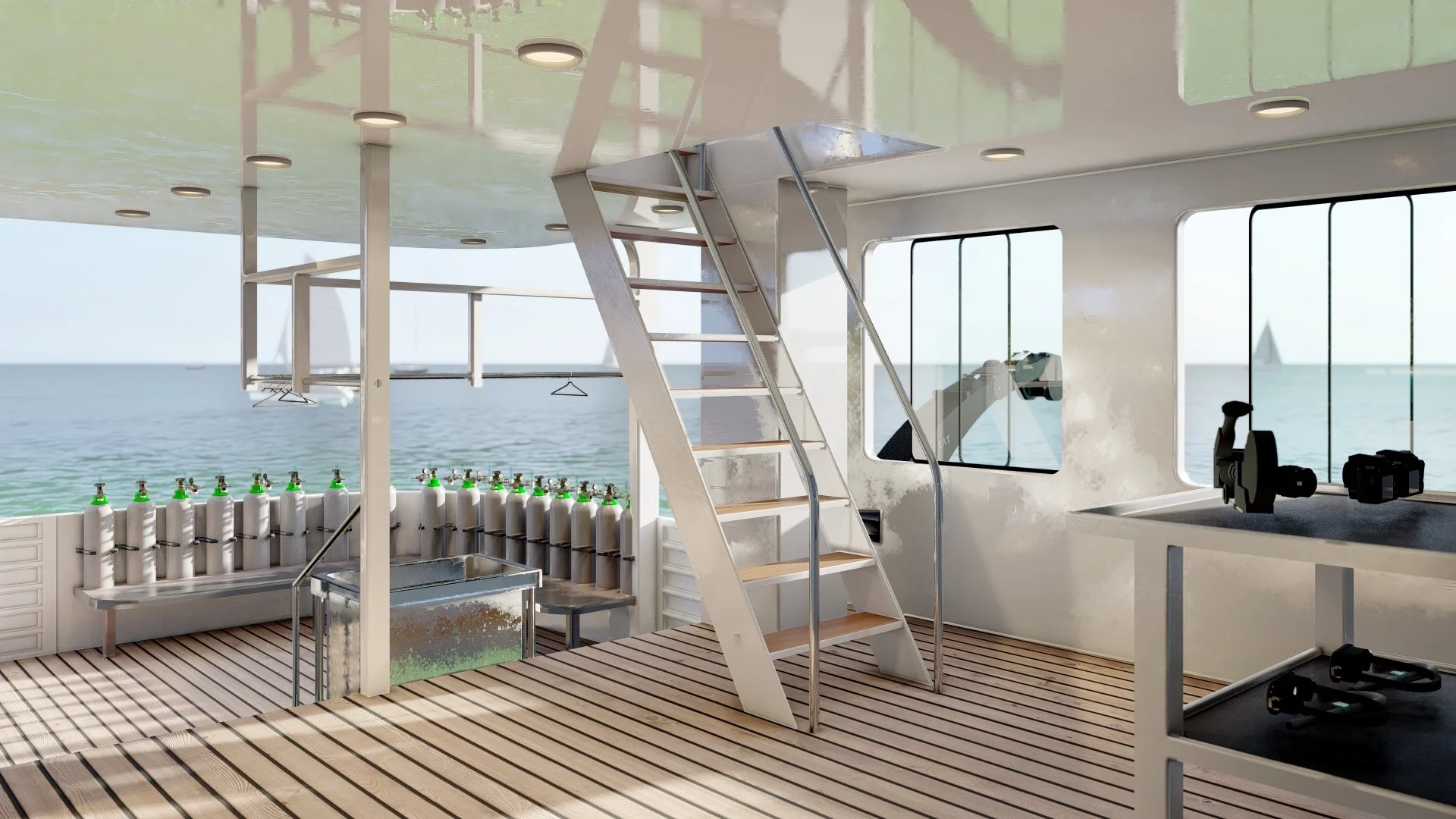
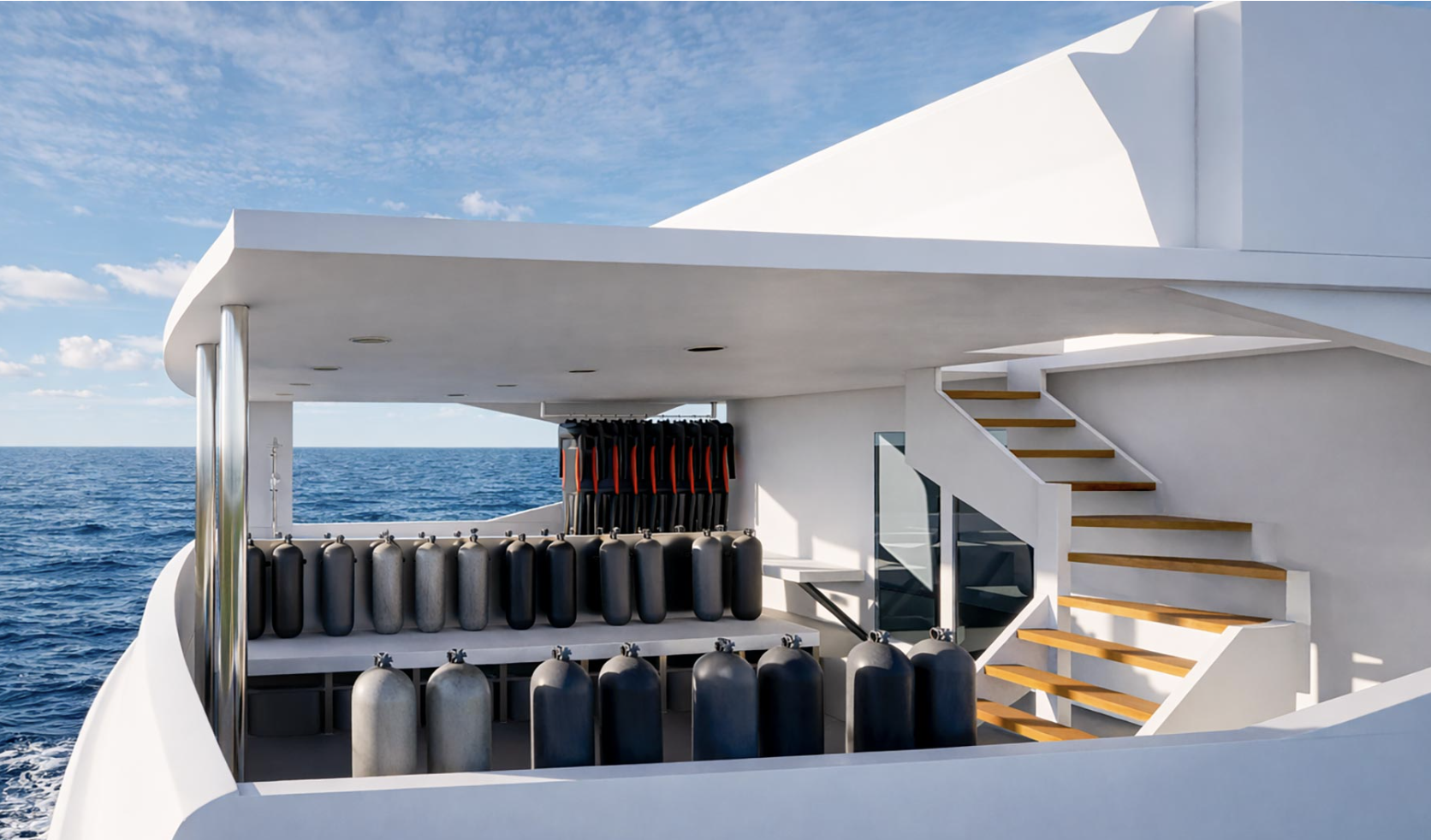
7 nights aboard Galaxy Diver II
Full rental gear if needed ($300 value)Nitrox on all dives ($200 value)
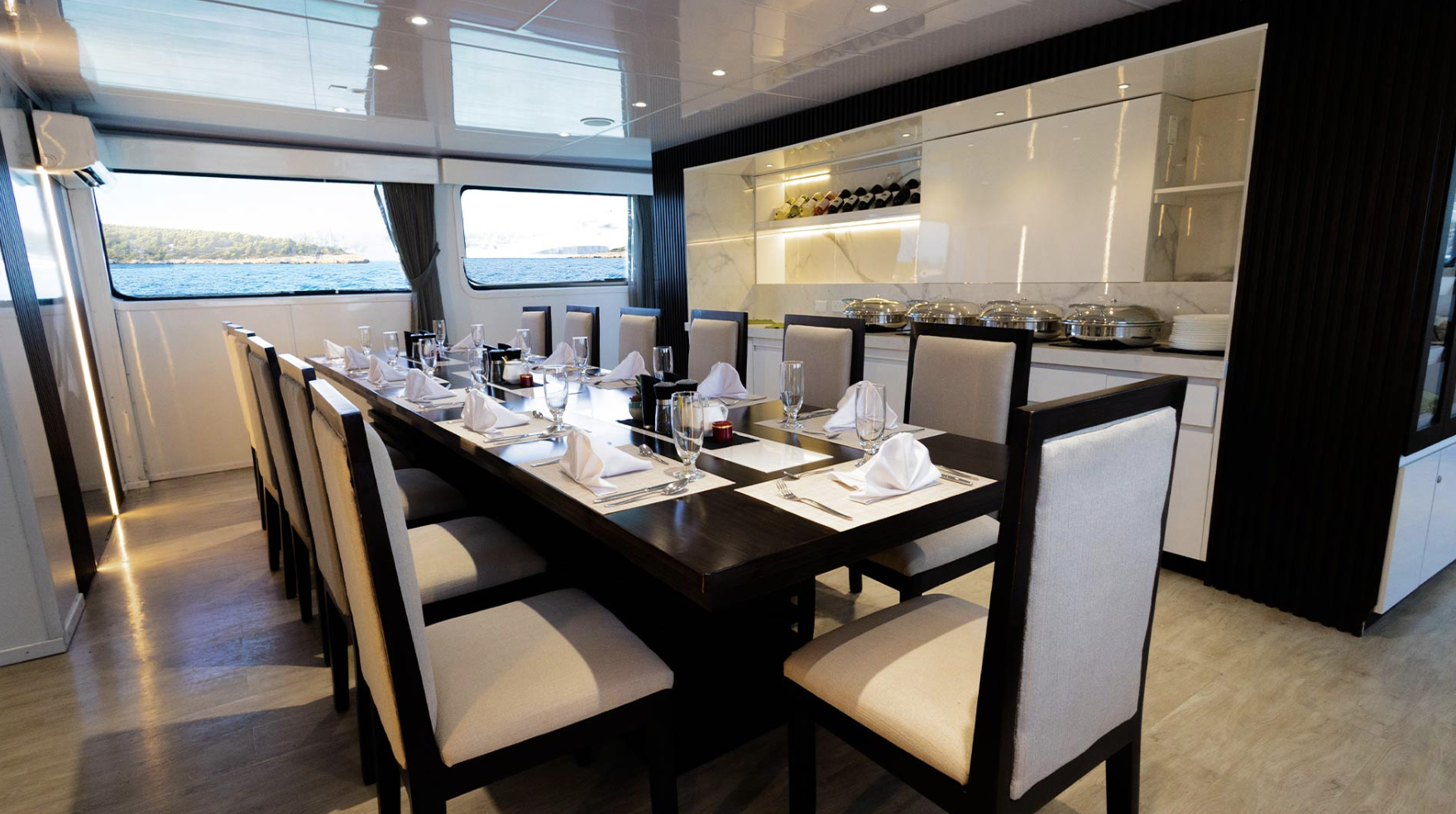
All meals onboard, plus snacks between dives
Dedicated naturalist and dive guides
Nightly editing and storytelling sessions
Dedicated photographer onboard
Starlink / Wi-Fi connectivity onboard
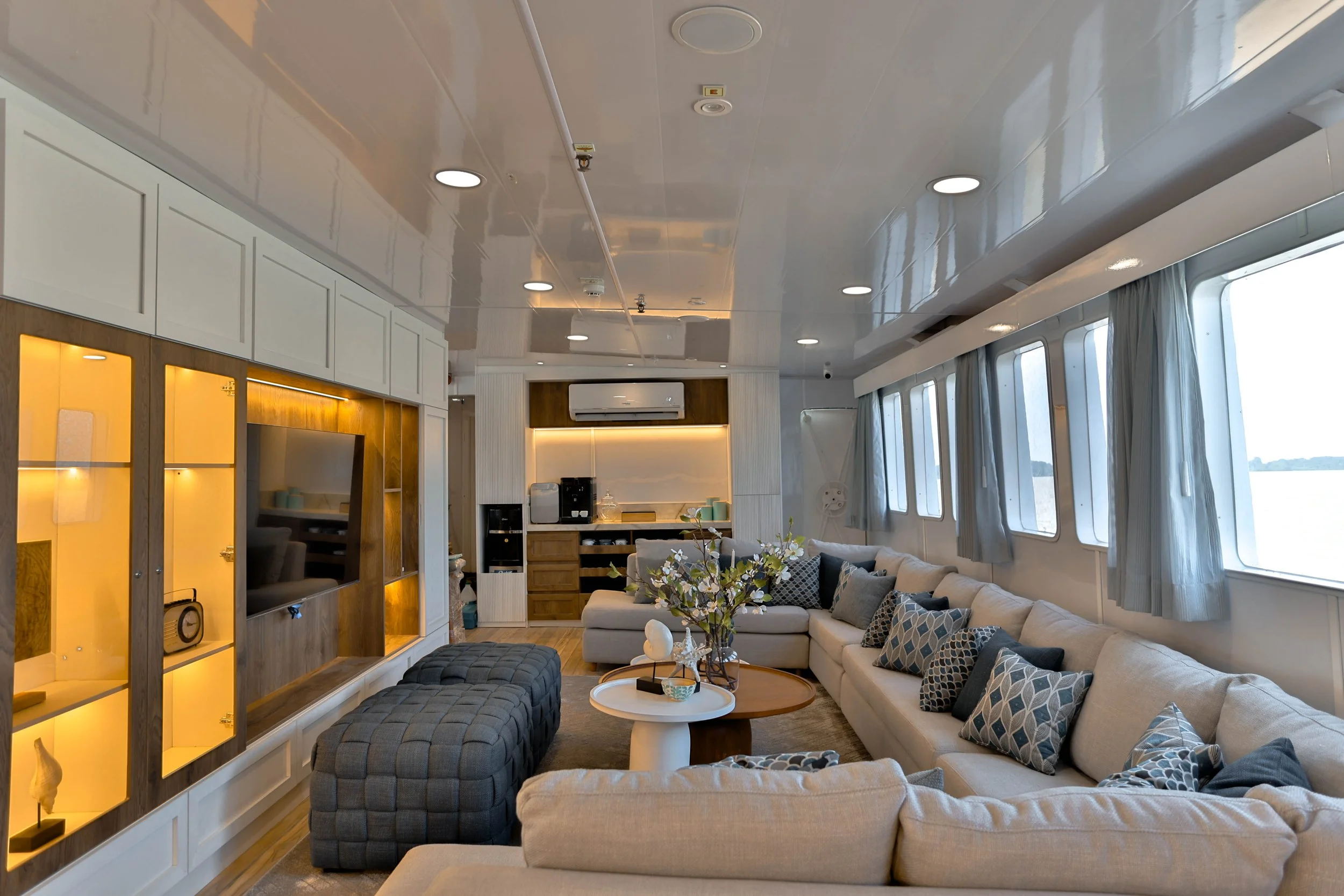
Air-conditioned cabin with en-suite bathroom
Baltra airport transfers, both directions
Santa Cruz Highlands land excursion
Not included
Airfare to/from Baltra Airport (GPS)
Galapagos National Park entrance fee (~$100, cash on arrival)
INGALA migration card
Dive and travel insurance — mandatory, DAN recommended
Nitrox certification (available as an add-on)
Alcohol and soft drinks (available onboard)
Gratuities for crew and dive guides
Rental dive gear (add-on)
Optional Puerto Ayora extended stay (add-on)
Migration card ($20)
Requirements
Advanced Open Water certification — required
Nitrox certification — required (add-on available)
Strong buoyancy control
Comfortable in currents
Previous liveaboard experience preferred
Passport valid 6+ months beyond travel
Dive log — we recommend the Buddy app
The Diving
This is the kind of diving you travel across the world for.
A good friend of mine at the Charles Darwin Research Station once put it perfectly: you’d need to visit four or five different places around the world to experience what Galápagos gives you in one trip.
Currents, thermoclines and surge are part of what makes these waters so alive, but don’t let Galápagos’ reputation intimidate you—the diving is often far more manageable than people expect.
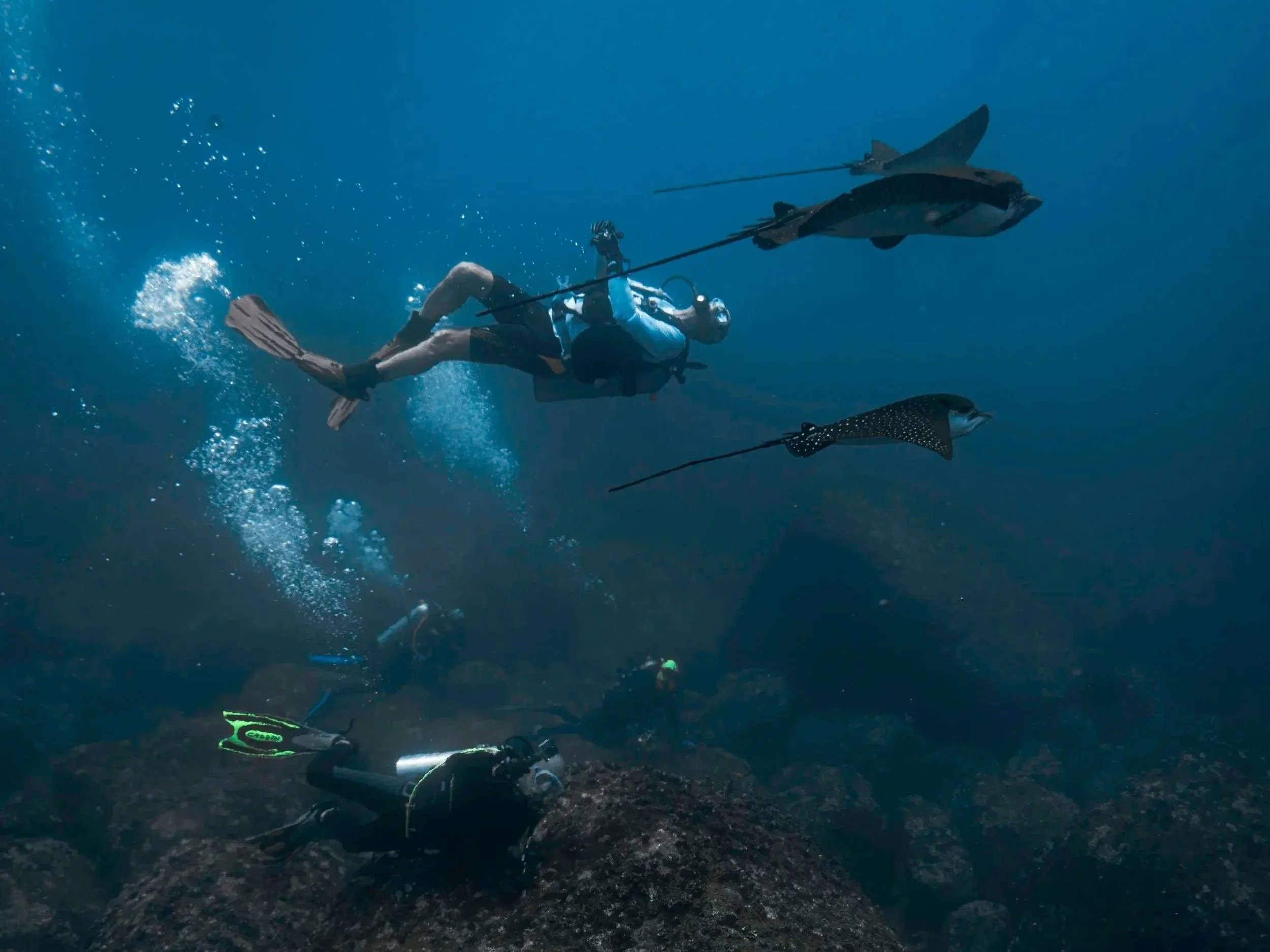
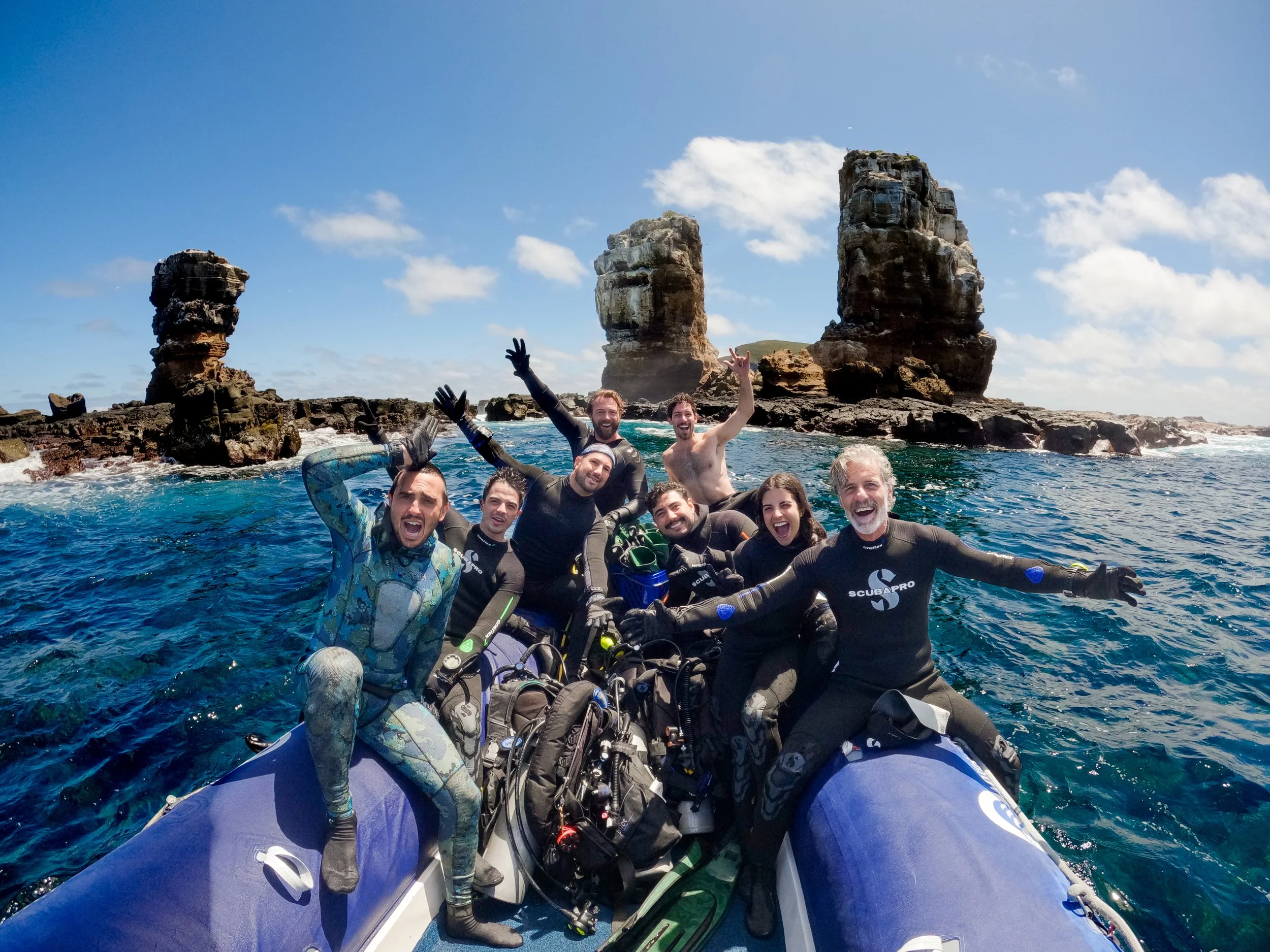
At Wolf and Darwin, think schooling hammerheads, Galápagos sharks, rays, turtles, dolphins, mantas and seasonal whale sharks. At Cape Douglas, marine iguanas feed underwater.
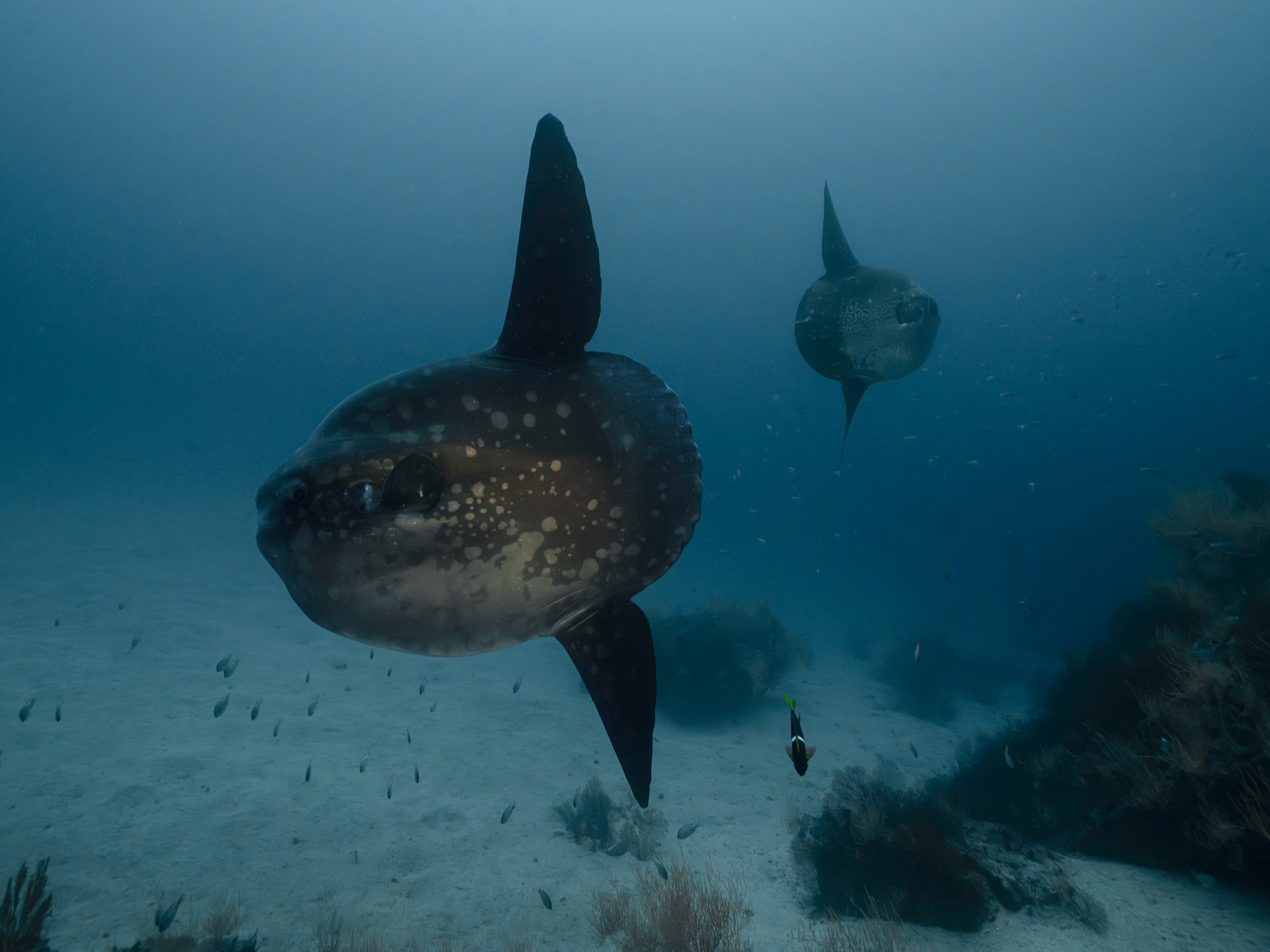
You know what you came to see. But in Galápagos, you never know what might come out of the blue.
Wolf Island – Shark Bay
Wolf Island – La Banana
Darwin – El Arenal
Darwin’s Arch
Vicente Roca Point
Cape Douglas
Cousins Rock
Punta Carrion
Sites we may dive
What you’ll come away with
GoPro PADI® Distinctive Specialty
A full certification in underwater capture, taught onboard across the week.
GoPro QUIK Editing Specialty
A second PADI certification — mobile editing, storytelling and export workflow.
Nightly sessions
Editing workshops, footage critiques, recap screenings and guest ambassador presentations.
Professional coverage
A dedicated photographer onboard, plus a professionally edited expedition recap.
Exposure
5–7mm
Nitrox
On all dives
Dives
11–12
Certifications
2 PADI specialties
Current
Moderate
Crossing
14 hrs to Wolf
Questions
BEFORE YOU BOOK
-
Galápagos has a reputation for being advanced diving—and you should absolutely be a comfortable, confident diver—but it’s often made to sound much more extreme than it actually is. Yes, we can have current, surge and changing conditions, but that’s also what brings the incredible marine life here. Our guides brief every dive based on the conditions that day, and we dive as a group. You don’t need to be an extreme diver; you need solid buoyancy, comfort in the water and the ability to follow the dive plan. For many of our guests, Galápagos ends up being far more manageable—and a lot more fun—than they expected.
-
This is the reason we come to Galápagos. Hammerhead sharks, sea turtles, sea lions, rays, marine iguanas, penguins and huge schools of fish are among the encounters Galápagos is famous for, while Darwin and Wolf bring the possibility of some truly massive pelagic action. Wildlife changes with the seasons and nothing in the wild is guaranteed, but the cooler season is particularly associated with whale shark encounters around Darwin, generally from roughly June into November. The magic of Galápagos is that you never really know what might come out of the blue—and some of our best encounters have been the ones we never expected.
-
Probably not as cold as you’ve heard. Most of our diving is generally around 19–22°C / 66–72°F, depending on the site and conditions. On some dives we can encounter colder thermoclines, occasionally around 15–16°C / 59–61°F, but these colder layers may only be part of the dive. We recommend being prepared with appropriate exposure protection—typically a good wetsuit, hood and whatever additional thermal protection you personally prefer. The goal is simple: stay warm so you can focus on what you came all this way to see.
-
We strongly recommend Nitrox for this expedition. With multiple dives each day over several consecutive days, Nitrox can help extend allowable no-decompression time on many dives and reduce nitrogen loading compared with air when used appropriately. It doesn’t replace conservative dive planning, but it’s an excellent tool for repetitive diving. If you’re not Nitrox certified yet, talk to us before the expedition and we can help you get ready.
I would avoid saying simply that Nitrox is “safer,” because that is too absolute. The wording above gets across the safety benefit you’re thinking about without making a claim you don’t want on the website.
-
Yes—we strongly recommend both. Galápagos is remote, and that’s part of what makes diving here so extraordinary. Dive accident insurance can help cover specialized expenses associated with a diving accident that ordinary health or travel insurance may not cover, including hyperbaric treatment and emergency transportation depending on the policy. We recommend DAN membership and appropriate dive accident insurance, as well as travel protection for things like trip cancellation, interruption and baggage. Always review the policy and make sure the coverage is appropriate for your trip.
-
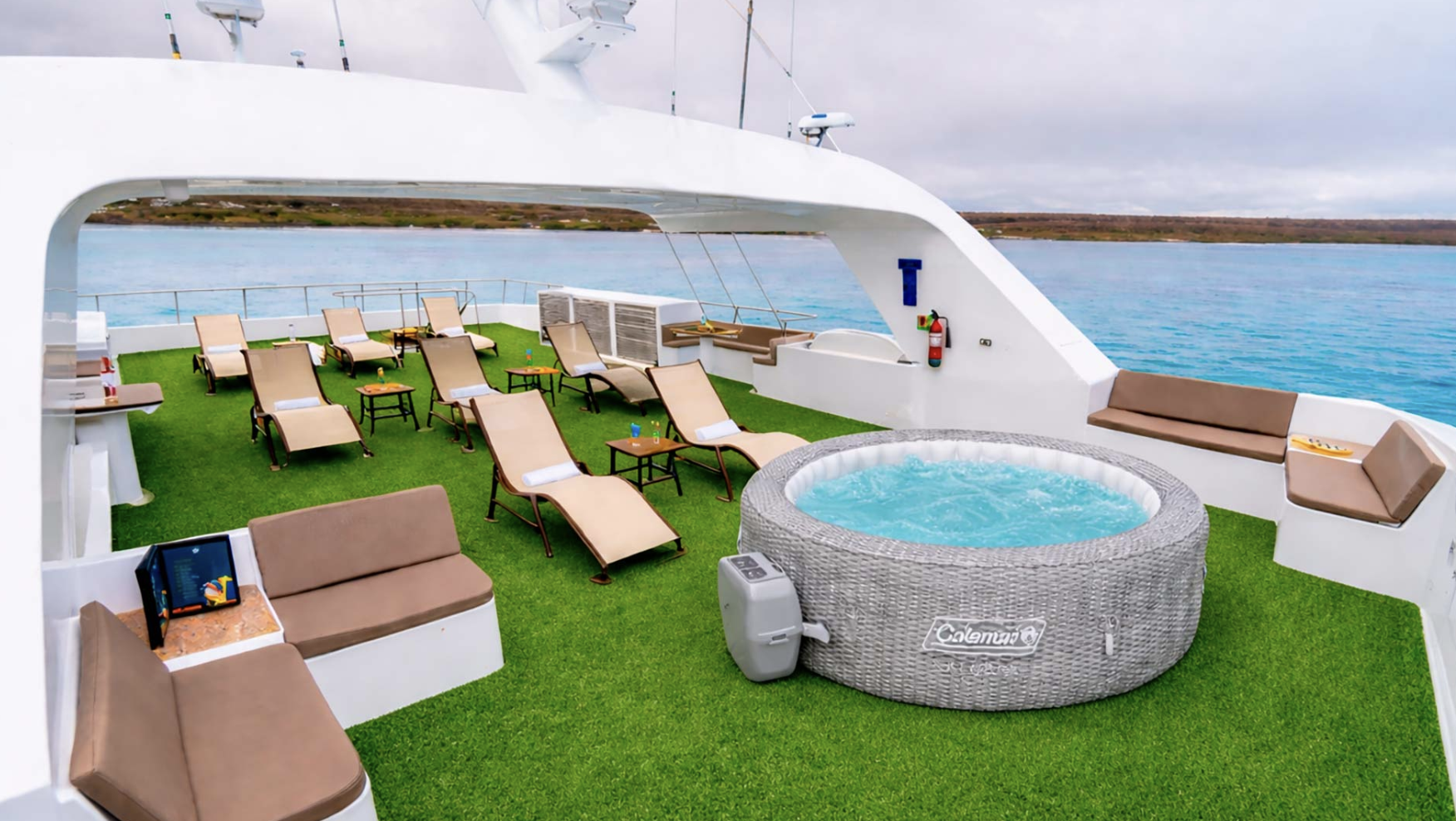
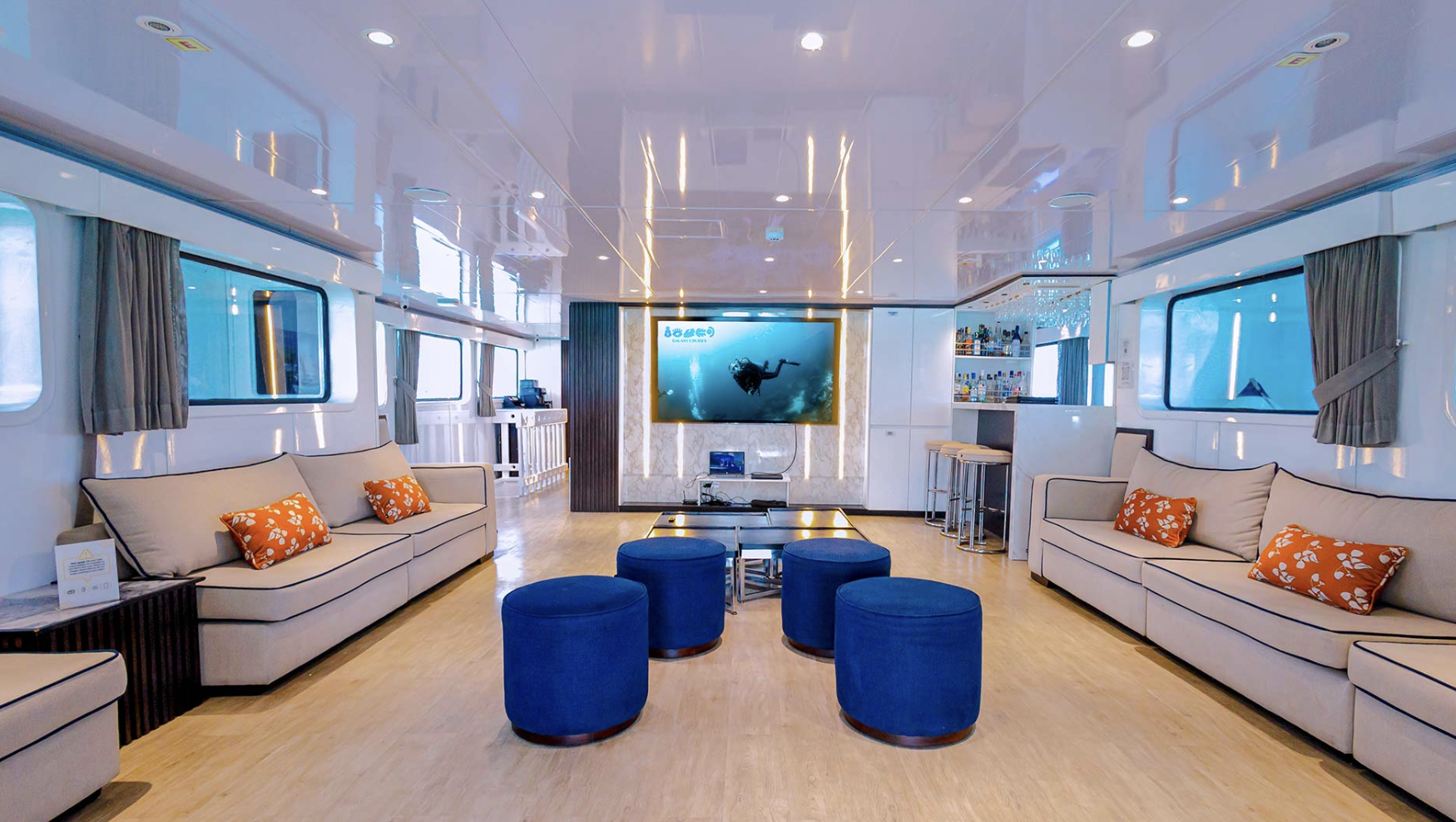
We do make open-ocean crossings—it’s Galápagos—but the Galaxy Diver III is a large, wide and stable liveaboard, and most guests settle into life onboard very quickly. If you know you’re prone to motion sickness, the best approach is to prepare before you feel sick rather than wait for symptoms to start. Speak with your doctor or pharmacist before traveling about the option that’s appropriate for you, and start your trip prepared. Once we’re out there, the reward for those crossings is getting to places like Darwin and Wolf.
.
-
Absolutely. An Aquatics International trip leader will be with the group throughout the expedition—from arrival and getting everyone settled to the diving, onboard experience and everything in between. You’re not simply booking a spot on a liveaboard and being sent on your way. We’re traveling and diving Galápagos together.
-
Yes. Galaxy Diver III has Starlink onboard, so you can stay connected while we’re at sea. That means you can check in with home, share some of the adventure and stay connected during the expedition. That said, we’re still operating in one of the most remote places on Earth, so connectivity can vary—and honestly, Galápagos is a pretty great place to disconnect for a while.