
Cozumel Drift Diving Explained: What to Expect on the Reef
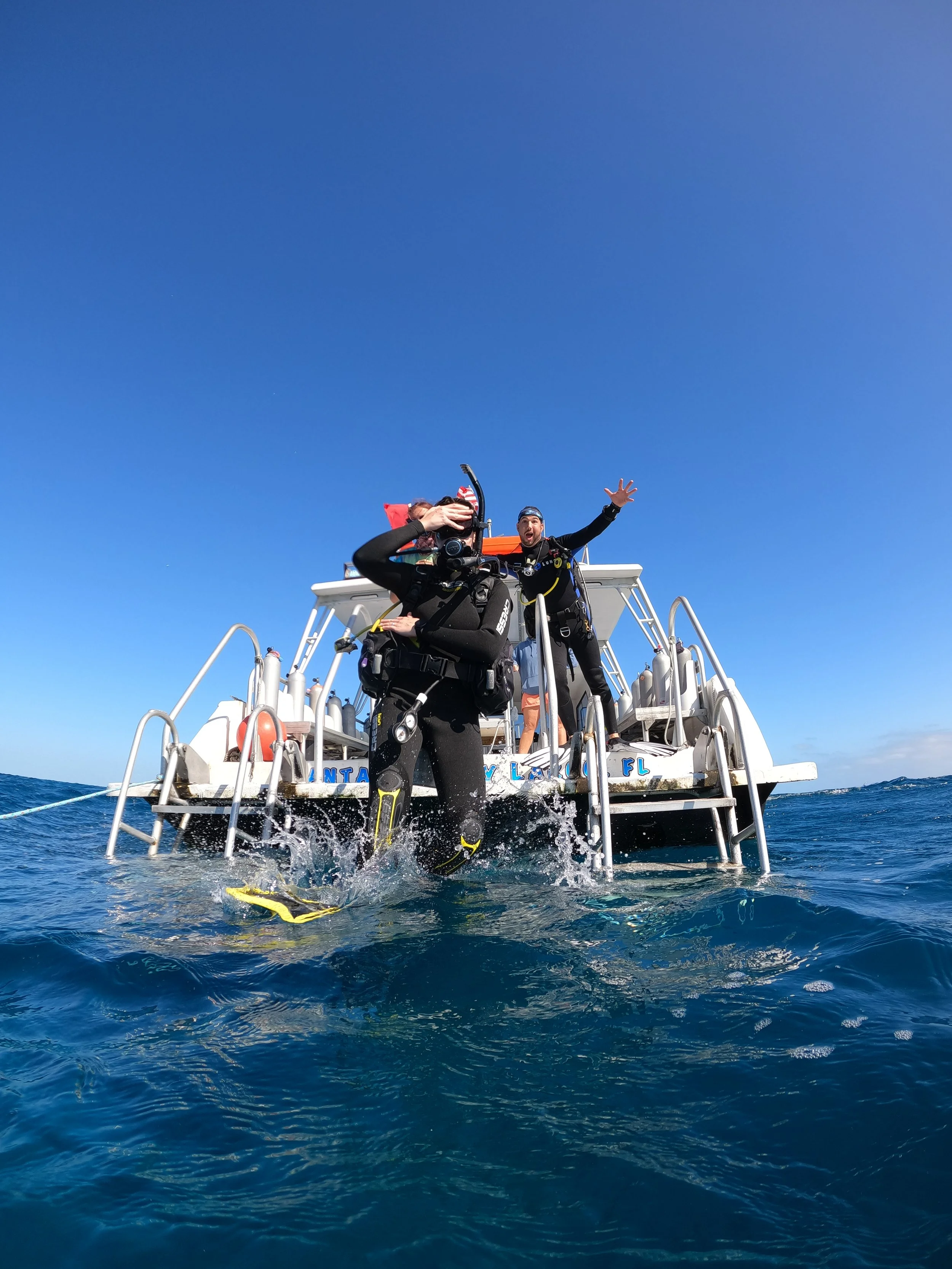
If you've never drift dived before, Cozumel is where most divers try it for the first time and where most divers get hooked for good.
Here's what it actually is, what to expect, and why the island's current-driven reefs are some of the best diving in the Caribbean.
What drift diving actually means
Instead of swimming against a current or anchoring in place, you let the current carry you along the reef while the boat tracks your bubbles from the surface. No fighting the water, no burning air kicking upstream — just drifting past coral walls and swim-throughs while the reef does the work of moving the scenery.
It sounds passive. It isn't. Cozumel's currents move steadily but predictably, which means you spend your air on looking, not swimming — which is exactly why bottom times here tend to run longer than almost anywhere else in the Caribbean.
The sites worth knowing
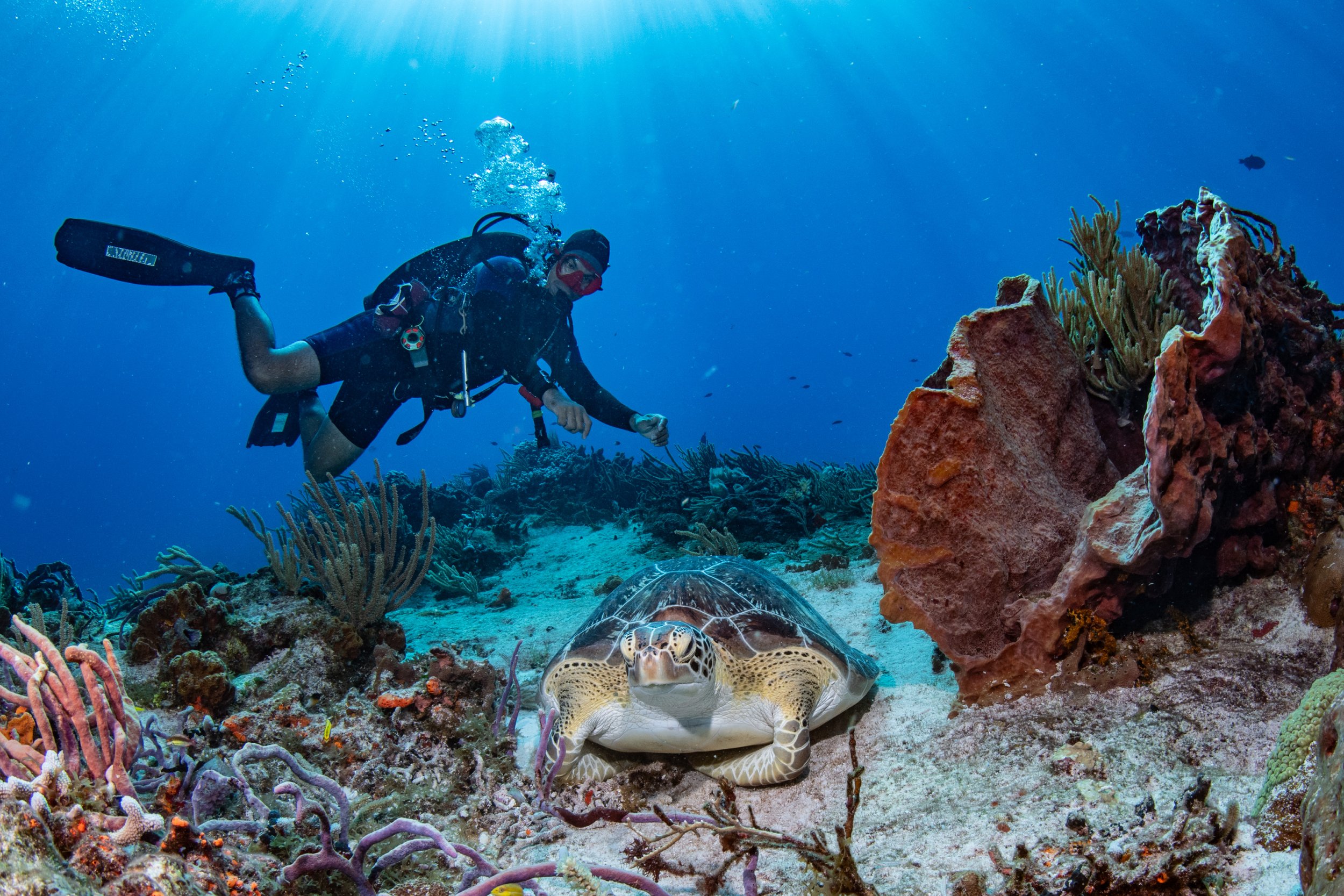
Cozumel's reef system is part of the Mesoamerican Barrier Reef, the second-largest barrier reef in the world, and a handful of sites define the island's reputation:
Palancar Reef — dramatic walls, swim-throughs, and coral pinnacles; often considered the signature Cozumel dive
Santa Rosa Wall — a sheer drop-off with some of the island's most striking topography
Columbia Deep — deeper coral formations and a good shot at bigger pelagic life
Devil's Throat — a swim-through chimney formation for more experienced divers
Every one of these is a drift dive by nature — the current decides your path, and a good dive guide reads it well enough that you barely notice you're not steering.
What lives here
Cozumel's reefs host eagle rays, nurse sharks, sea turtles, and dense schools of jacks and grunts moving along the wall. The one to watch for specifically: the splendid toadfish, a species found nowhere else on Earth but these reefs. If you spot one tucked into a coral crevice, you've seen something genuinely endemic to this exact stretch of ocean.
Why boat size actually matters here
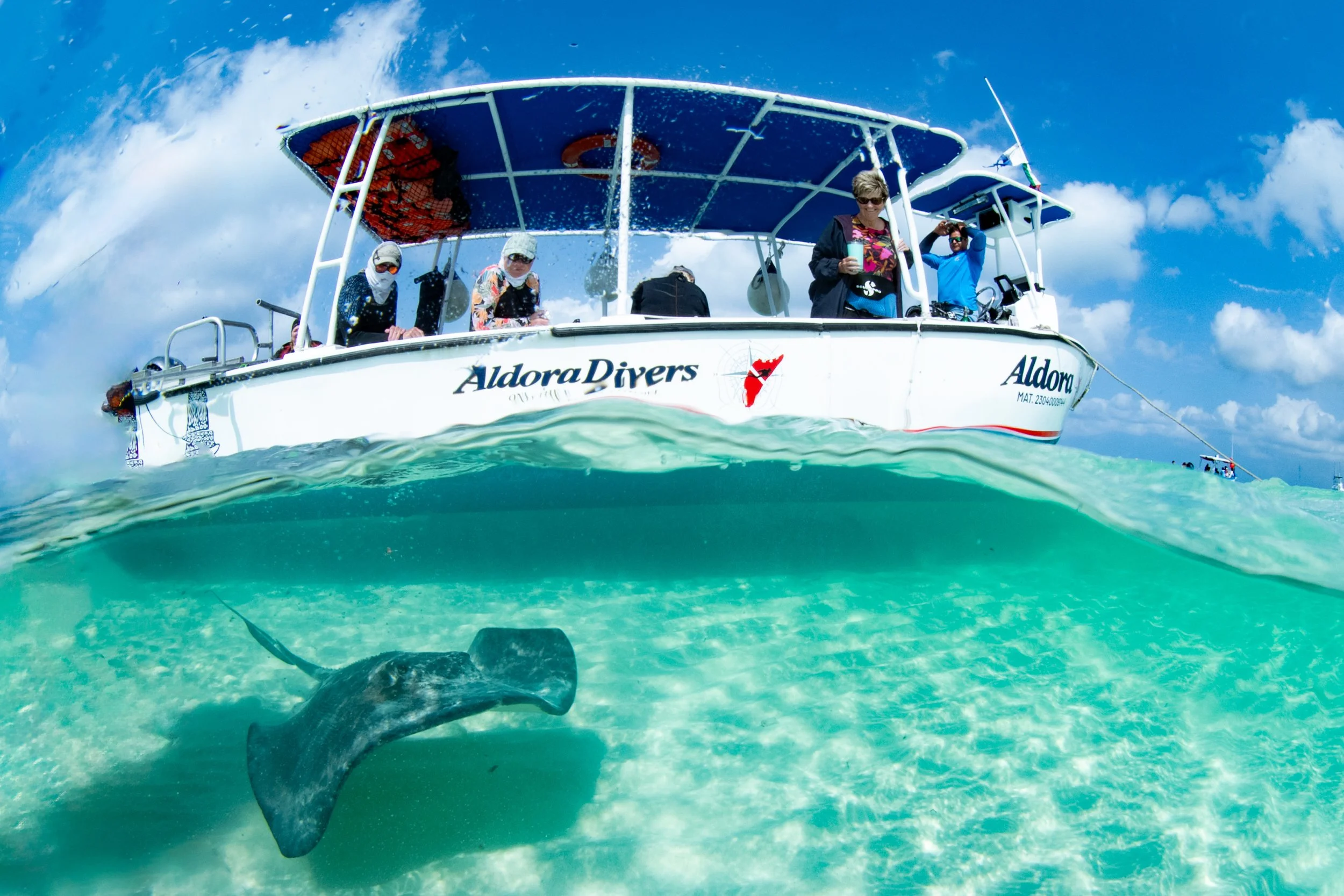
Drift diving works best in small groups. Too many divers spread out along a wall and a guide can't track everyone, which means less time in the water and more time regrouping. On our Cozumel trips, we dive with Aldora Divers, capped at six divers per boat, using HP steel tanks for more air and less weight. The result: dives that regularly run 70+ minutes, well past what a standard rec-dive profile allows.
That's the real difference between a good Cozumel dive and a great one — not the reef, which is spectacular regardless, but how much of it you actually get to see before you're low on air.
Diving Cozumel this November? [See the full Cozumel itinerary →]
